

If you work in Web3 and you still think search is only ten blue links, you’re in the wrong job.
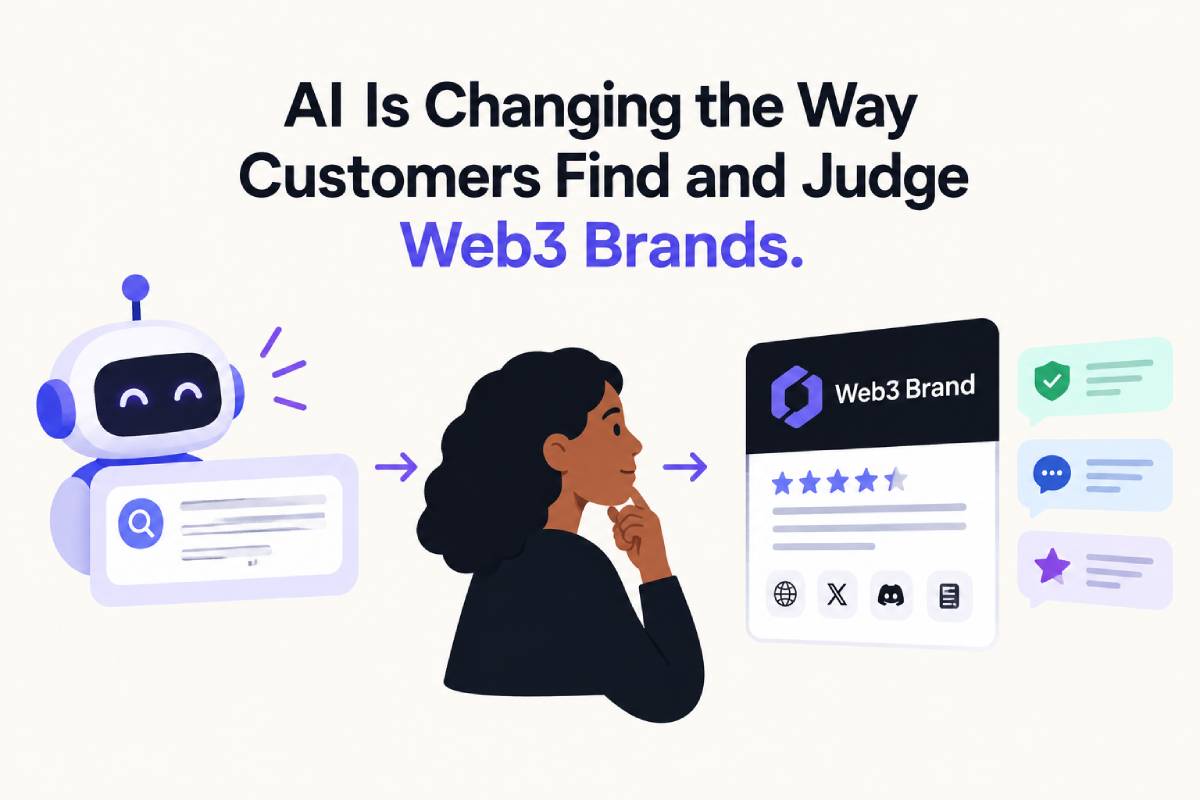
More and more buyers are asking ChatGPT, Gemini, Perplexity, and Google’s AI answers what to use, what to buy, and what to avoid. Then they pick a name from the short list the software gives them.
Today’s blog shows you how to get your brand into that short list by writing clearer pages, repeating the same ideas across the web, and proving you’re a real operator.
_____________________________________________________________
Quick answers – jump to section
- What answer engines are doing differently
- Why AI rewards clarity and consensus
- How to restructure your content so you get picked as the answer
- Where to build authority so AI uses your brand
- A simple 30-day execution plan
- Final Thoughts
- Frequently Asked Questions
_____________________________________________________________
What answer engines are doing differently

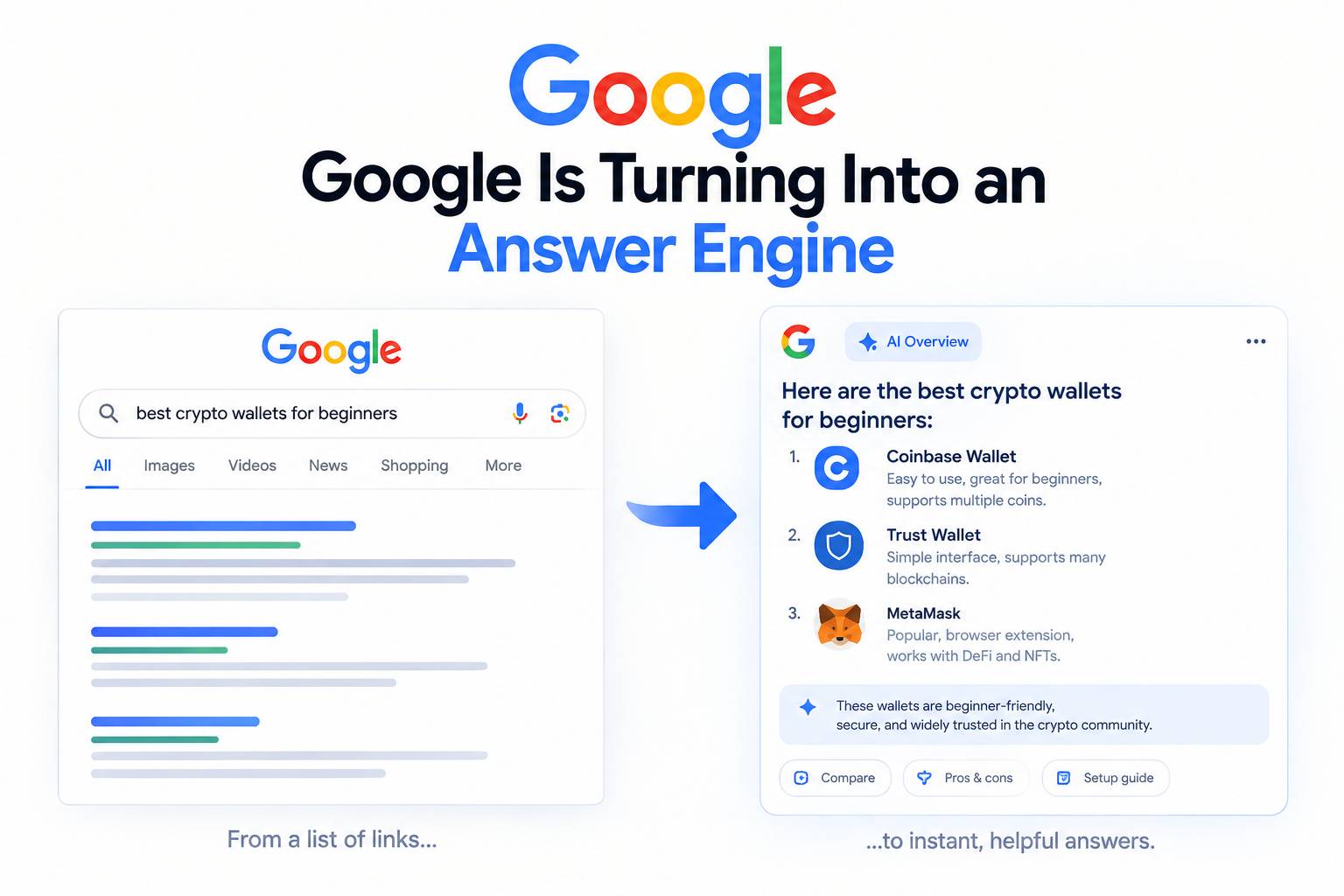
Old search was a list. You clicked around, compared pages, and made your own call.
Answer engines skip the list and hand you a single response. That response is built from sources the system can read fast, understand fast, and cross-check fast. If your site is hard for the LLMs to read and break into clear parts, or your claims are vague, you won’t get pulled into the answer.
_____________________________________________________________
Why AI rewards clarity and consensus
A lot of Web3 marketing still tries to win with volume. More posts, more threads, more “announcements,” more clutter.
Answer engines don’t work like that. They prefer clear definitions, plain language, and the same point repeated in multiple places. In public discussions, the common worry is simple: “Why does AI keep naming the same brands, even when I know other teams exist.” The plain answer is repetition. The useful answer is you can build that repetition on purpose.
_____________________________________________________________
How to restructure your content so you get picked as the answer
Start by picking the exact questions your buyers ask, then answer them like you’re talking to a smart kid. Short words, clear steps, and no fancy filler.
Then make the page easy for machines to read. Put the answer early. Use clean headings that match the question. Add a short FAQ that repeats the same point in a slightly different way.
If you want a practical reference for how brands get pulled into AI answers, use a plain-English breakdown of AI citations and brand mentions and copy the structure.
_____________________________________________________________
Where to build authority so AI uses your brand
Your site is only one piece. Answer engines also learn from what the wider web keeps saying about you.
So you need proof in places where people already argue, compare, and show evidence. That means community spaces, partner pages, podcasts, founder write-ups, and high-quality posts that get quoted. If your community plan is “spam the same link,” you’ll get muted.
If you want a cleaner baseline for how to show up without burning everyone out, use a simple Discord approach that founders can keep up with and build from there.
_____________________________________________________________
A simple 30-day execution plan
Week 1 is picking targets.
Choose 10 buyer questions you want to own, and write down the exact words people use. Then choose 3 pages on your site that will carry the load.
Week 2 is rewriting.
Fix those 3 pages so the answer is near the top, the headings match the question, and the page explains terms like you would to a new hire.
Week 3 is distribution.
Publish 10 short pieces in places your buyers already read, and point them back to the pages.
Week 4 is proof and cleanup.
Add examples, screenshots, and numbers, then remove anything that sounds like marketing fog.
If you want a simple way to structure those pages so machines can read them fast, use a plain-English entity-based SEO walkthrough for Web3 teams as your checklist.
_____________________________________________________________
Final Thoughts
If you want a quick way to check your channel mix, compare it to a ranked list of growth approaches by ROI for Web3 startups and cut the stuff that never leads to calls.
Answer engines are already deciding who gets seen first. If your brand isn’t being pulled into answers, it’s not because you’re bad. It’s because the machine can’t read you, or can’t confirm you.
So make it easy. Write like a human, structure like a machine, and repeat the same core points across the web until the system has no excuse to ignore you.
_____________________________________________________________
Frequently Asked Questions
Is SEO still worth doing for Web3?
Yes, because answer engines still pull from pages that are crawlable and easy to understand.
The difference is you’re writing for two readers now: a human buyer and a machine that tries to summarise you.
How long does it take to get cited in AI answers?
Some pages get picked up fast, while others take weeks or months.
The biggest driver is how clear the page is, and how often the same claim shows up across other sites.
What should I measure?
Track whether your brand shows up for target prompts, and whether those prompts lead to clicks, signups, or calls.
Also track whether other sites start quoting your phrasing, because that’s a sign your wording is becoming the default.
_________________________________________________________________
Download the free Growth Engine Blueprint here and copy how we generate leads for our clients.
Want to know how we can guarantee a mighty boost to your traffic, rank, reputation and authority in you niche?
Tap here to chat to me and I’ll show you how we make it happen.
If you’ve enjoyed reading today’s blog, please share our blog link below.
Do you have a blog on business and marketing that you’d like to share on influxjuice.com/blog? Contact me at rob@influxjuice.com.
Latest Blogs
- Why YouTube Plays Such a Big Role in Web3 Research and Buyer Confidence
- How to Edit Professional Videos for Your Business on a Budget
- The Fake Podcast Scam: How a LinkedIn Invitation Nearly Put Malware on My Mac
- Why Google Is Turning Into an Answer Engine, and What It Means for Web3 Teams
- Why Web3 Teams Are Turning to Gamma to Build Decks and Docs Faster