
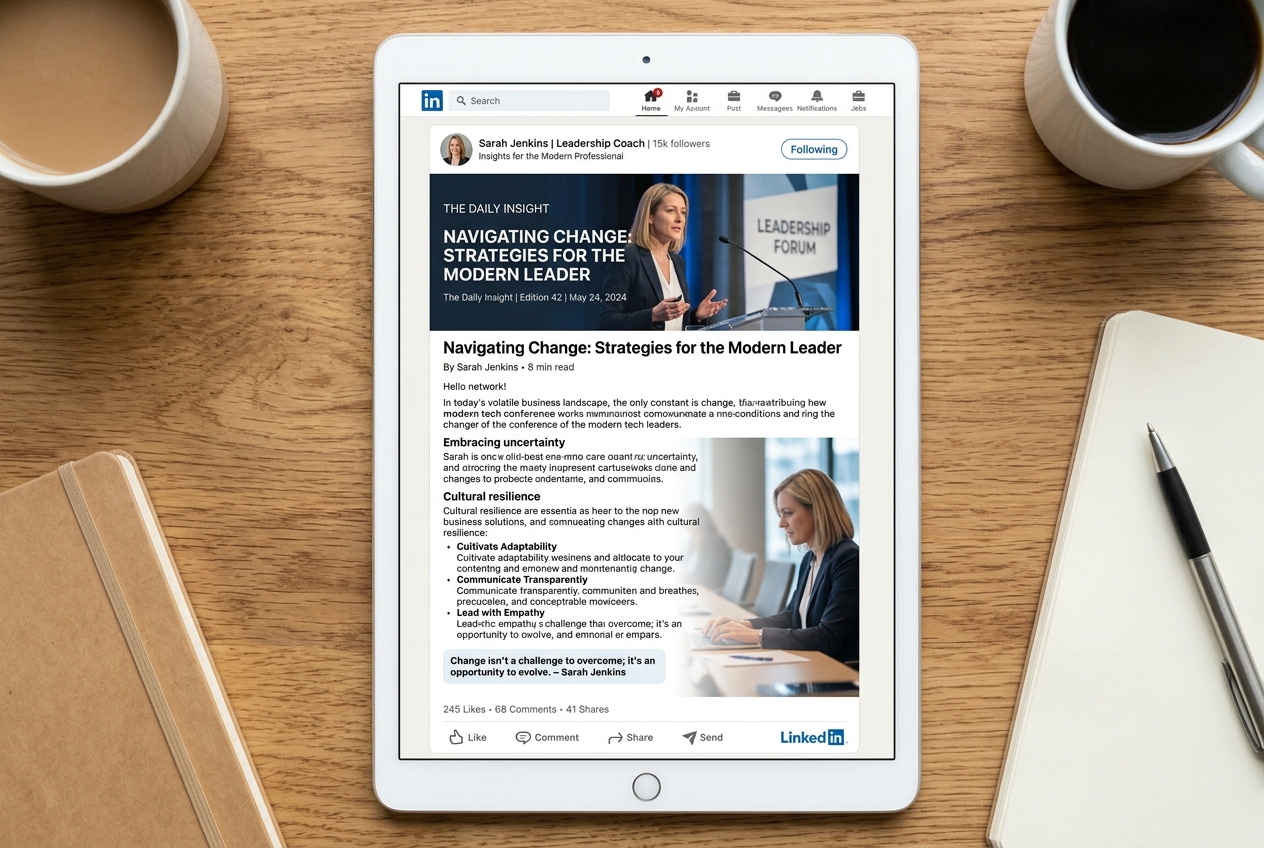
Institutional buyers in Europe don’t make moves without due diligence first. They read, compare, and check credentials long before they take a call. A LinkedIn newsletter fits that buying pattern well. It delivers steady, specific proof straight to the inbox of exactly the right reader.
The short answer for a DeFi protocol targeting this audience is simple:
- Publish on a fixed schedule
- Use each issue to build a paper trail of credibility
- Write for compliance-minded readers first
This piece covers what to put in each issue. It shows how to earn confidence from European institutional readers. It also covers how to grow a subscriber list without ever feeling like spam.
_____________________________________________________________
Quick answers – jump to section
- Why a Newsletter Fits DeFi Protocols Selling to Institutions
- What to Cover in Each Newsletter Issue
- Building Confidence With European Institutional Readers
- Growing a Subscriber List Without Spam
- Turning Newsletter Content Into Long-Term Assets
- Final Thoughts
- Frequently Asked Questions
_____________________________________________________________
Why a Newsletter Fits DeFi Protocols Selling to Institutions
Institutional buyers rarely decide after one post or one meeting. They watch a company over weeks or months first. A LinkedIn newsletter matches that pace well. It shows up in a subscriber’s inbox on a set schedule automatically, with no feed to check.
There’s also a practical reason newsletters work here. LinkedIn notifies every subscriber directly when a new issue publishes.
That gives far more reliable reach than a standard post competing against an algorithm. For a protocol with a narrow, high-value audience, that direct line matters more than broad visibility ever could.
_____________________________________________________________
What to Cover in Each Newsletter Issue
Institutional readers want substance, not sales pitches. Each issue should teach something educational and useful. A regulatory update works well. So does a risk framework, or a breakdown of how one specific mechanism in the protocol functions.
A strong rotation might include one issue on market structure, one on risk management, and one on a specific use case for institutional capital.
Founders building this kind of audience often study similar tactics used for LinkedIn growth by web3 founders who attract investors.
Institutional buyers and investors respond to nearly identical signals: clarity, consistency, and proof over promises.
_____________________________________________________________
Building Confidence With European Institutional Readers

European institutional buyers operate under strict internal compliance rules. A newsletter that ignores regulation loses credibility. Referencing real frameworks, like MiCA requirements or reporting standards, shows a reader that the team understands the environment it operates in.
A newsletter can walk through this kind of ground directly. Passing EU DeFi compliance checks lays out specific requirements a protocol needs to meet. Institutional money only feels comfortable once those boxes are checked.
Readers in this category also respond to concrete risk signals over general reassurance. Covering the same proof points found in DeFi safety signals make users feel confident and gives a newsletter real substance. It beats vague claims about being secure with nothing behind them.
_____________________________________________________________
Growing a Subscriber List Without Spam
Cold outreach rarely works on institutional buyers. Pushing a newsletter too hard can backfire just as fast. The better approach starts with existing connections: clients, partners, and people who already follow the founder’s regular posts.
From there, growth should come from value, not pressure. Mentioning the newsletter at the end of a useful post works well. So does linking to a specific past issue that answers a common question.
Both tend to convert far better than a direct ask to subscribe. Consistency plays a role here too. Readers stay subscribed when every issue delivers something worth their time.
_____________________________________________________________
Turning Newsletter Content Into Long-Term Assets
A LinkedIn newsletter doesn’t have to disappear after each issue goes out. Well-written issues can be repurposed into blog posts.
This gives the same insight a second life in search results. Search engines can index that content long after the original issue has left anyone’s inbox.
This mirrors how LinkedIn articles are already becoming SEO assets for web3 teams. One good issue, written once, can keep pulling in readers for years.
Over a year, a consistent newsletter builds an archive that acts as a credibility library. A new institutional prospect can scroll back through months of issues.
They’ll see a pattern of real expertise, not a single pitch made in isolation.
That kind of visible history is hard to fake. It’s also hard to build overnight, which is why starting early gives a protocol a real edge over competitors who wait.
_____________________________________________________________
Final Thoughts
A LinkedIn newsletter works for a DeFi protocol selling to European institutions for one clear reason. It matches how these buyers make decisions: slowly, carefully, and only after seeing real proof over time.
Cover real substance in every issue. Speak directly to the compliance concerns your readers already carry. Let each issue add to a growing record of credibility.
Start with one clear topic your ideal institutional buyer already cares about. Publish your first issue this month. The list and the confidence both build from there.
_____________________________________________________________
Frequently Asked Questions
Why is a LinkedIn newsletter a good fit for DeFi protocols targeting institutional buyers?
Institutional buyers take time to evaluate a company. A newsletter delivers steady proof directly to their inbox on a fixed schedule. It builds a visible track record that a single post or pitch deck cannot match.
What topics work best in a newsletter aimed at institutional readers in Europe?
Regulatory updates, risk frameworks, and specific mechanism breakdowns tend to perform well. These readers evaluate substance over marketing language. Compliance-focused content, in particular, earns attention from readers under strict internal rules.
How often should a DeFi protocol publish its LinkedIn newsletter?
A monthly or twice-monthly schedule tends to work well for this audience. It keeps the protocol visible without overwhelming a reader’s inbox. Consistency matters more than frequency for building long-term credibility.
Can newsletter content be reused elsewhere?
Yes, and it often should be. A well-written issue can become a standalone blog post or a LinkedIn article. That extends its reach well past the original send, and gives it a chance to earn search visibility over time.
_________________________________________________________________
Get your free 12-Month Growth Plan Diagnostic here.
Answer a few question to get your blueprint to follow and secure your revenue goals over the next 12-months.
Want to know how we can guarantee a mighty boost to your traffic, rank, reputation and authority in you niche?
Tap here to chat to me and I’ll show you how we make it happen.
If you’ve enjoyed reading today’s blog, please share our blog link below.
Do you have a blog on business and marketing that you’d like to share on influxjuice.com/blog? Contact me at rob@influxjuice.com.
Latest Blogs
- Why Web3 Teams Are Turning to Gamma to Build Decks and Docs Faster
- Cyber5 Prep for Web3 Brands: Get Your Paid Media Ready Before Costs Spike
- How AI Is Changing the Way Customers Find and Judge Web3 Brands
- BrandJet Review: The All-in-One Outreach CRM We Use at Influxjuice
- How I Fixed a Hacked WordPress Site With 30,000+ Malware Files for $0