
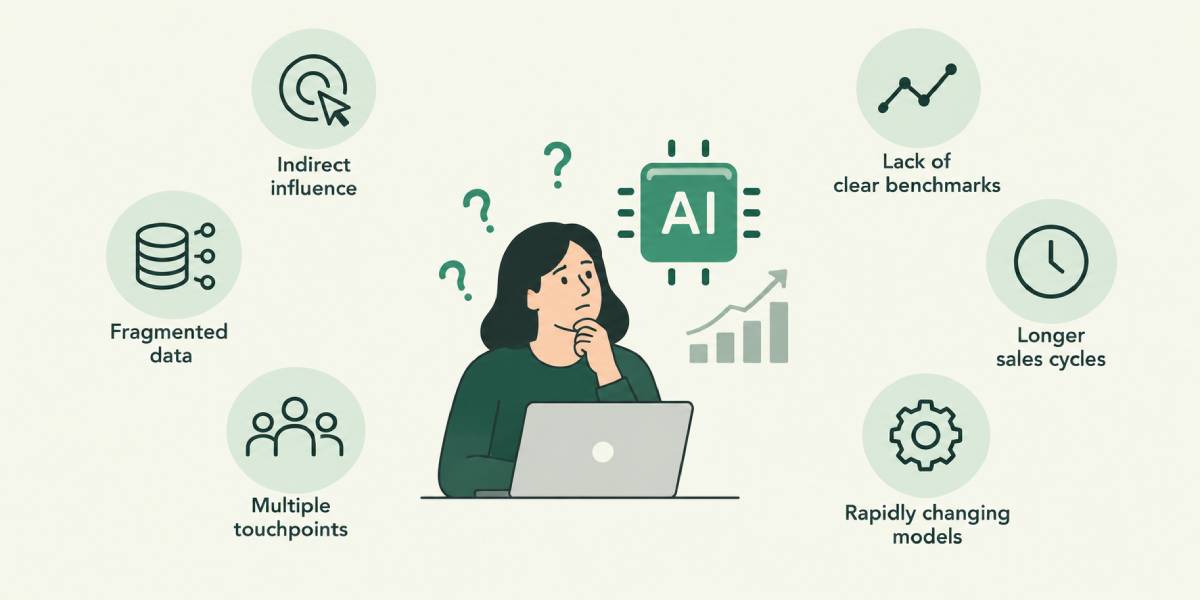
AI is changing how buyers find web3 projects, yet marketers struggle to prove what it is worth. The reasons are simple once you see them. AI answers leave no click behind. Those answers change from one ask to the next.
Buyers also use many wallets and devices, so one person looks like five. This piece covers each of these problems. It also gives web3 marketers a simple way to measure AI impact without waiting for perfect data.
_____________________________________________________________
Quick Answers – Jump to Section
- Why AI Impact Is So Hard to See
- AI Answers Change Every Time Someone Asks
- Buyers Leave No Trail Before They Arrive
- One Buyer, Many Wallets and Devices
- Dashboards That Disagree With Each Other
- A Simpler Way to Measure AI Impact
- Final Thoughts
- Frequently Asked Questions
_______________________________________________________
Why AI Impact Is So Hard to See
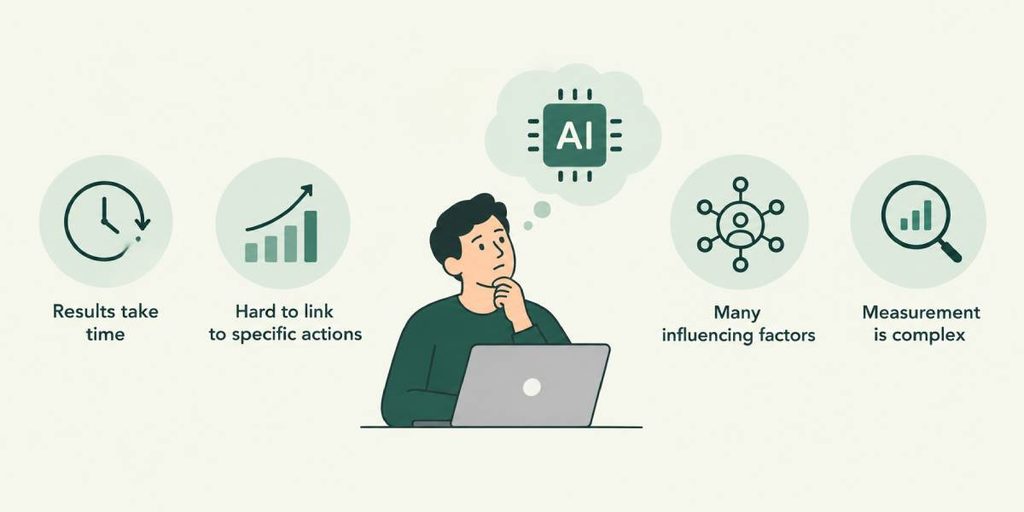
Old marketing was easy to count. Someone clicked an ad, landed on a page, and signed up. You could follow every step. AI breaks that chain. A buyer asks a chat tool a question, reads a reply, and picks a brand. Nothing in your reports records that moment.
Web3 makes the problem bigger. Your audience tries new tools early, so they use AI search sooner than many. They also hide behind wallet addresses and nicknames. The result is a gap. AI may be sending you real demand, yet your dashboard shows a flat line.
_______________________________________________________
AI Answers Change Every Time Someone Asks
Ask a search engine the same question twice, and you usually get the same list. AI tools do not work that way. They write a fresh answer each time. Your brand may appear on Monday and vanish on Tuesday. It may appear for one phrase and not for a close cousin of it.
This makes a single check useless. You need a repeatable test, with the same questions asked on a schedule. Learning how to measure GEO success for web3 growth gives you a method for this. Track how often you appear across many asks. A rate over time tells you more than any one screenshot.
_______________________________________________________
Buyers Leave No Trail Before They Arrive
A chat reply does not pass along a referrer. A buyer may read about you in an AI tool. Later, they type your name into a browser. Analytics files that visit as direct traffic. The AI tool gets no credit at all.
This is the core attribution problem. Credit goes to the last thing a person touched, not the first. Teams then cut budget from the work that created interest and pour more into the work that merely collected it. Over time, the whole plan drifts away from what builds demand, and nobody sees it happening.
_______________________________________________________
One Buyer, Many Wallets and Devices
A single web3 buyer may use a phone, a laptop, and three wallets. Each one looks like a different person to your tools. A visit on Monday and a signup on Friday may never connect. That breaks the story you need to tell.
Better identity data helps here. How to master customer data with web3 decentralized CDPs explains how to stitch these pieces back into one profile. You do not need perfect data. Even a rough match between wallet activity and site visits makes AI impact easier to spot. A partial picture still beats none, and it improves as your data grows. Start with the wallets your best customers already share with you.
_______________________________________________________
Dashboards That Disagree With Each Other
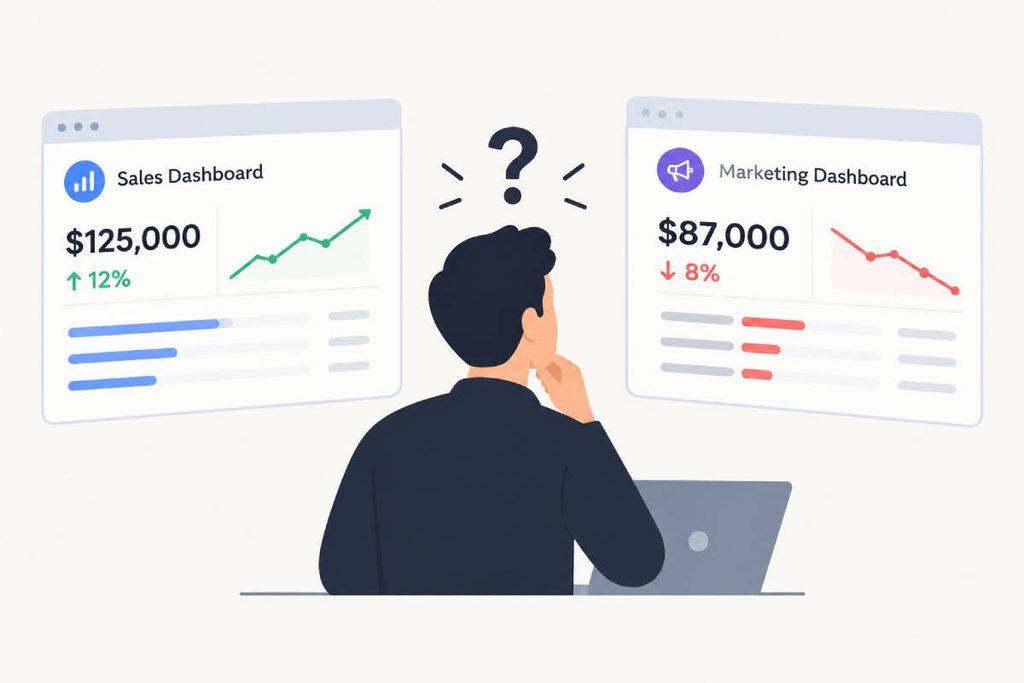
Every tool has its own rules. One dashboard counts a session after thirty minutes. Another counts it after one. One credits the first touch, and another credits the last. Put them side by side, and the numbers rarely match. A manager sees the mismatch and loses confidence in all of them.
Part of the trouble is that surface numbers look neat while hiding the real story. Why your marketing reports lie in web3 breaks down how this happens. When AI enters the picture, the gaps widen. The fix is to agree on a few definitions up front. Decide what counts as a visit, a lead, and a customer, and write it down.
_______________________________________________________
A Simpler Way to Measure AI Impact
You do not need a giant system. You need a short list of signals that point the same way. Track your mentions in AI answers each month. Track branded search growth. Add one open question to your signup form: how did you hear about us? Read the answers.
Tool choice matters too. Picking web3 analytics tools that give clean answers fast helps you avoid dashboards that bury the signal. Pick one or two tools you can explain to a teammate in a minute. A simple setup that people read beats a fancy one that nobody opens. Review it on a fixed day each month so the habit sticks.
_______________________________________________________
Final Thoughts
AI impact is hard to measure because the old trail of clicks is gone. Answers change between asks, buyers split across wallets, and dashboards disagree. None of that means the impact is missing. It means you need new habits.
Start small this month. Test the same twenty questions on a schedule. Ask every new user how they found you. Write down your definitions. Those three steps will tell you more than another dashboard ever could.
_______________________________________________________
Frequently Asked Questions
Why is AI impact so hard to measure for marketers?
AI answers leave no click or referrer. They also change between asks, and buyers use many devices and wallets. All three break normal tracking.
How can web3 marketers measure AI visibility?
Ask the same set of questions in AI tools each month. Record which brands appear. Compare your mentions to your rivals and watch the trend.
Why does AI traffic show up as direct traffic?
A chat reply does not pass a referrer. If a buyer later types your name into a browser, analytics logs the visit as direct.
What is the easiest way to see if AI is helping?
Add an open question to your signup form asking how people found you. Pair those answers with branded search growth and AI mentions.
_________________________________________________________________
Download your free copy of the Growth Engine Blueprint here and start accelerating your leads.
Want to know how we can guarantee a mighty boost to your traffic, rank, reputation and authority in you niche?
Tap here to chat to me and I’ll show you how we make it happen.
If you’ve enjoyed reading today’s blog, please share our blog link below.
Do you have a blog on business and marketing that you’d like to share on influxjuice.com/blog? Contact me at rob@influxjuice.com.
Latest Blogs
- What’s Making AI Impact Difficult to Measure for Marketers?
- How European SMEs Are Using Invoice Tokenization to Access DeFi Liquidity Without a Bank
- How Much Does an AI Voice Agent Cost for B2B Sales & Calls? (Human Operator vs AI Comparison)
- What to Measure When the Customer Journey No Longer Starts With a Click
- Why Early Days Club Is a Smart Move for Early-Stage Founders (and How to Get 80% Off)