

The MetaMask Web3 wallet has long been the default starting point for anyone going on-chain. Though for years it came with a set of tedious rituals:
- manually toggling RPC networks
- approving raw hex string contracts with zero context
- keeping fingers crossed that a new dApp connection wouldn’t drain your balance
Smaller, agile competitors built whole product strategies around those exact pain points. But legacy tools rarely stay stagnant.
With the default integration of Blockaid security threat-scanning and per-dApp automatic network switching, MetaMask executed a major change in how established Web3 infrastructure handles modern UX friction.
Here is how the world’s most recognisable self-custody wallet adapted to the multi-chain era, and what it means for the market moving forward.
Quick answers – jump to section
- The Death of the Manual Network Dropdown
- How Per-dApp Network Isolation Works
- Security Evolves from Reactive to Native
- What This Means for Web3 Adoption
- Final Thoughts
- Frequently Asked Questions
The Death of the Manual Network Dropdown
Historically, multi-chain navigation was a major pain point for users. If you wanted to swap an asset on Arbitrum, open a liquidity position on Polygon, and mint an NFT on Ethereum Mainnet, you had to manually open your extension and switch the network toggle every single time. Forget to switch, and the dApp would throw a cryptic network error, or worse, fail the transaction and burn gas fees.
MetaMask phased out that manual-only architecture in favour of a per-dApp network connection state.
How Per-dApp Network Isolation Works
Simultaneous Connections: MetaMask maintains independent network contexts for every open tab. You can run a mainnet DEX in one window while interacting with an L2 yield aggregator in another without context-switching.
Automatic Protocol Alignment: When a dApp requests an execution on a specific chain ID, MetaMask detects the required parameters and prompts the network change dynamically.
Unified Asset Views: Rather than locking tokens behind single-chain view toggles, assets surface across all active chains automatically on the home dashboard.
Per-dApp isolation removes one of the most common causes of failed transactions for active users. This analysis of the wallet UX designs that keep users engaged across Web3 products covers how connection state management compares to other approaches teams are building around multi-chain navigation.
Security Evolves from Reactive to Native
Beyond chain-hopping, the biggest threat in Web3 self-custody has always been phishing and malicious contract approvals. For years, users relied on third-party security extensions to decipher what a smart contract signature was actually asking for.
By embedding Blockaid threat scanning directly into the core extension engine, security shifted from an opt-in luxury to an automatic default.
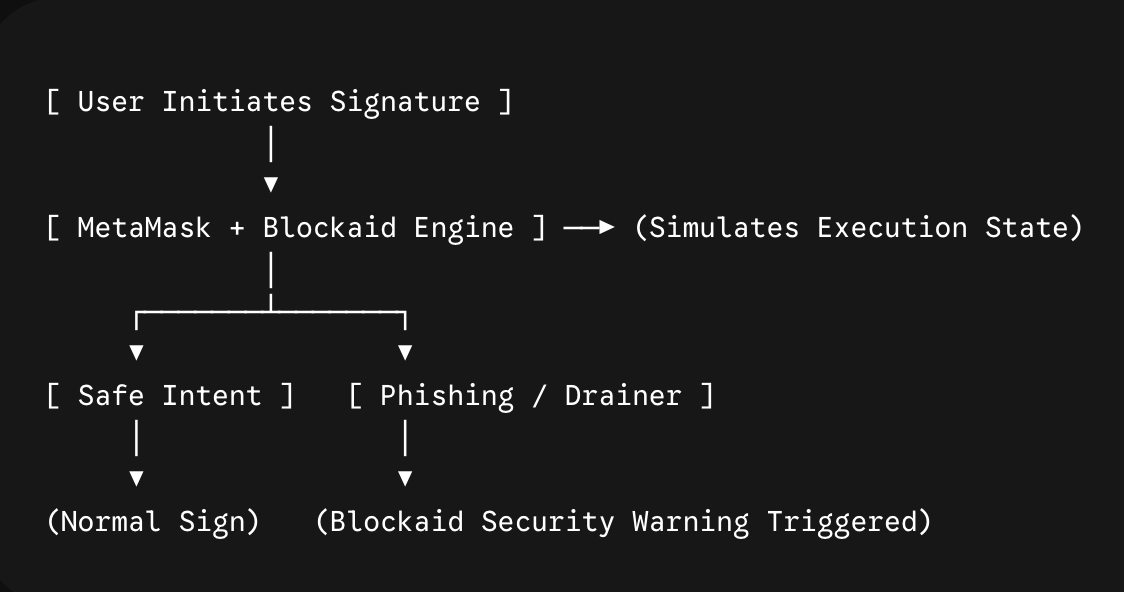
Instead of displaying raw hex data, the wallet now simulates the transaction on a shadow node before execution. If a contract attempts an unverified allowance drain, an illegal permit signature, or interacts with a known malicious address, the wallet interrupts the flow with a hard security alert.
Making threat detection the default rather than an add-on changes the protection profile for every MetaMask user regardless of their technical level. This look at the proof signals that make DeFi users feel safe on-chain covers the security signals users and developers rely on when evaluating whether a protocol or wallet is worth holding assets in.
What This Means for Web3 Adoption
When the default tool used by millions of people across 190 countries removes foundational friction, the floor for the entire ecosystem lifts.
Beginners no longer need to be educated on the complex mechanics of RPC endpoints or raw hex parsing just to use Web3 safely. By combining universal dApp support with native safety rails, MetaMask has shown that legacy tools can modernise without sacrificing their core architecture.
The onboarding gap between Web3 products and the people who would benefit from them has been a persistent problem. Reducing the number of decisions a new user has to make — which network, which security tool, which approval to read — closes part of that gap. This breakdown of the steps that reduce wallet onboarding drop-off for Web3 products covers the specific friction points that cause users to abandon wallet setup before completing a single transaction.
Final Thoughts
MetaMask’s 2026 updates show what happens when an infrastructure-level tool stops treating security and multi-chain support as power-user features. Making Blockaid the default and building per-dApp network state into the core architecture means every user — not just technically experienced ones — benefits from the improvements the ecosystem spent years asking for. That is the leverage point of a dominant default tool: changing the floor for everyone.
For Web3 teams building products on top of wallet infrastructure, the standard of what users now expect has risen. Friction that was once acceptable is now a reason to switch. This walkthrough of how AI agents are changing wallet security in Web3 covers how automated security is developing as the expected baseline across the ecosystem — and what that means for product teams building on top of it.
Frequently Asked Questions
What is Blockaid in MetaMask?
Blockaid is a security engine embedded directly into the MetaMask extension. It simulates each transaction on a shadow node before execution, detecting malicious contract approvals, phishing attempts, and known drainer addresses before the user signs anything. It is active by default — no separate installation required.
How does per-dApp network switching work in MetaMask?
MetaMask maintains an independent network context for each open browser tab. When a dApp requests execution on a specific chain, MetaMask detects the required chain ID and prompts the appropriate network switch without affecting other open tabs.
Does MetaMask still support manual network switching?
Yes. Users can still switch networks manually from the extension. Per-dApp automatic switching runs alongside this — it means you no longer have to switch manually every time you move between dApps on different chains.
What is transaction simulation in MetaMask?
Transaction simulation runs the contract call through a shadow execution environment before you sign. MetaMask shows you the expected outcome — assets sent, received, or approved — before anything is confirmed on-chain. This is what allows Blockaid to flag malicious approvals before they execute.
Is MetaMask still the leading Web3 wallet in 2026?
MetaMask remains the most widely adopted self-custody browser extension wallet, with a presence across 190 countries. Alternatives like Rabby and Rainbow have grown in popularity among active DeFi users, but MetaMask’s default integration with the majority of dApps maintains its dominant market position.
Get your free 12-Month Growth Plan Diagnostic here.
Answer a few question to get your blueprint to follow and secure your revenue goals over the next 12-months.
Want to know how we can guarantee a mighty boost to your traffic, rank, reputation and authority in you niche?
Tap here to chat to me and I’ll show you how we make it happen.
If you’ve enjoyed reading today’s blog, please share our blog link below.
Do you have a blog on business and marketing that you’d like to share on influxjuice.com/blog? Contact me at rob@influxjuice.com.
Latest Blogs
- How to Build One Content Strategy That Works Across Google, YouTube, AI Tools, and LinkedIn
- Why YouTube Plays Such a Big Role in Web3 Research and Buyer Confidence
- How to Edit Professional Videos for Your Business on a Budget
- The Fake Podcast Scam: How a LinkedIn Invitation Nearly Put Malware on My Mac
- Why Google Is Turning Into an Answer Engine, and What It Means for Web3 Teams