

If you work in Web3, you already know the feeling. One week your protocol is everywhere. The next week, a random competitor shows up in ChatGPT and your name is missing. You did not ship a worse product. You just got left out of the answer.
Today’s blog is about tracking that problem the right way. Not with old-school rank tracking logic, and not with a single ‘visibility score’ that looks neat in a dashboard. Instead, you will track how often your brand shows up in the exact situations your buyers ask about, across tools like ChatGPT, Perplexity, Gemini, and Google AI Overviews.
_____________________________________________________________
Quick answers – jump to section
- What AI brand visibility tracking means in plain English
- Why Web3 teams keep tracking the wrong thing
- The three traps that break most AI visibility reports
- What people keep asking about AI visibility
- A simple visibility tracking setup you can run weekly
- How to pick prompts that match real buyer intent
- What to do when your brand never shows up
- How to report results without fooling yourself
- Final Thoughts
- Frequently Asked Questions
_________________________________________________
What AI brand visibility tracking means in plain English

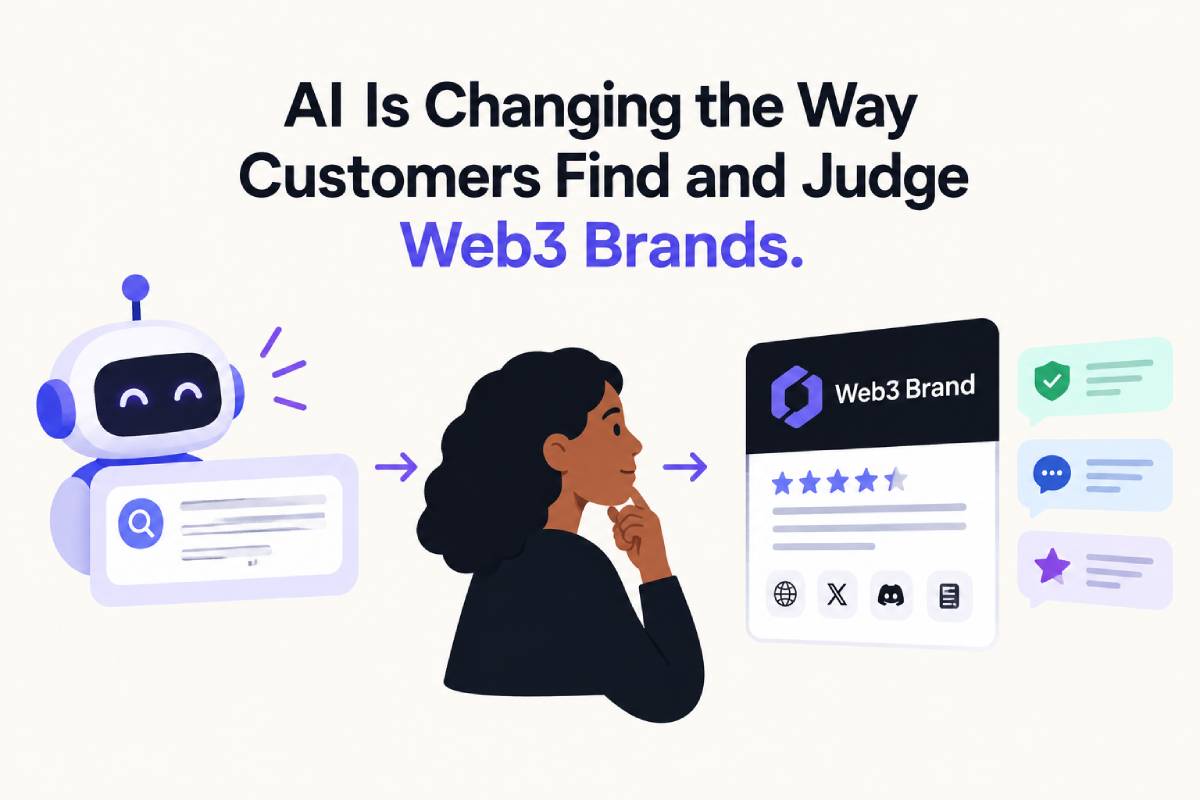
AI brand visibility tracking is checking if AI tools mention your brand when someone asks a question you care about.
That is it. No smoke. No fancy charts. If a buyer asks ‘best stablecoin payment provider for a marketplace’ and the AI names three companies, you want to know if you are one of them. If you are not, you are invisible in that moment.
In Web3, those moments happen fast. People ask about wallets, custody, compliance, bridges, audits, yield, stablecoins, and on-chain data. They want a short answer. AI tools give them one.
So your job is to measure if you get picked, and how often.
_________________________________________________
Why Web3 teams keep tracking the wrong thing
Most teams copy the old SEO playbook.
They treat prompts like keywords, then run a tracker, then celebrate a score going up. The problem is simple. AI answers do not behave like Google rankings. You can ask the same thing twice and get a different answer. That is normal.
So if your tracking assumes the system is stable, your report is shaky from the start.
You are not measuring a fixed position. You are measuring a probability.
_________________________________________________
The three traps that break most AI visibility reports
Trap one: pretending there is a single correct answer.
With search, you can talk about position one, position two, and so on. With AI, there is no fixed list. The model generates a response. That response changes with wording, chat history, model updates, and even the time of day. So a single run tells you almost nothing.
The fix is to run the same prompt multiple times and track the rate your brand appears.
Think ‘7 out of 20 runs’ rather than ‘ranked third’.
Trap two: tracking prompts no real buyer uses.
A lot of tracking sets use prompts like ‘best crypto wallet’. Real buyers do not talk like that. They add context. They say things like ‘I need a wallet for a DAO with 5 signers, hardware support, and clear audit history’. If you only track the generic version, you may look visible while losing the deals that pay your bills.
Trap three: scaling prompts instead of fixing prompt quality.
When teams realise generic prompts are weak, they panic. Then they add hundreds of variations. That gets expensive and still misses the point. Ten well-built prompts that match real intent beat a thousand random ones.
If you want a clean way to think about prompt design, read how we approach AI mentions and citations in this post on earning AI citations and brand mentions in Web3.
_________________________________________________
What people keep asking about AI visibility
When you scrape real discussions, the same questions keep coming up.
First, people ask if AI visibility is just SEO with a new label. The honest answer is no. SEO still helps, but AI tools pull from many sources and they remix information. You are not only competing for clicks. You are competing to be included in the summary.
Second, people ask why a weaker brand shows up instead of them. Usually it is not magic. It is coverage. The competitor has content that matches the exact question, in plain language, with clear structure. Or they are mentioned on pages the model has seen more often.
Third, people ask what to track if there is no ranking. The best answer is ‘appearance rate’ plus ‘context fit’. Appearance rate is how often you show up. Context fit is if you show up for the prompts that match buying intent, not just top-of-funnel intent.
If you want your internal linking to support that work without feeling forced, use this practical guide on optimising internal linking with ChatGPT.
_________________________________________________
A simple visibility tracking setup you can run weekly
You do not need a huge tool stack to start.
Pick 20 to 40 prompts that match your pipeline. Split them into groups: awareness, comparison, and decision. Then run each prompt multiple times across the AI tools your buyers use. Log the answers in a sheet.
For each prompt, track:
- Did your brand show up
- Which competitors showed up
- What category labels you were placed under
- If the answer included a link, a source, or a named product feature
If you want a more tool-led internal linking workflow, compare your approach with this breakdown of Link Assistant internal linking tips.
_________________________________________________
How to pick prompts that match real buyer intent
Start with how your buyers speak, not how marketers speak.
In Web3, that usually means adding constraints. Chain, region, risk level, compliance needs, custody model, and team size. A buyer does not ask ‘best on-chain analytics’. They ask ‘on-chain analytics that can track exchange inflows for these tokens and export to a dashboard’.
A clean prompt template looks like this:
- Role: who is asking
- Goal: what they need to do
- Constraints: what they must avoid
- Context: what stage they are at
If you are stuck, pull prompts from sales calls, Telegram chats, Discord support tickets, and RFPs. Then rewrite them into one sentence that a 10-year-old could read.
_________________________________________________
What to do when your brand never shows up
If you never appear, do not start by blaming the model.
Start by checking if you have pages that answer the exact question. Not a vague ‘what is DeFi’ page. A direct page that says what you do, who it is for, and how it works, with proof.
Then see how other websites talk about your brand. If every mention comes from a press release packed with marketing language, AI has very little reliable information to work with.
Also, check if your content is written like a human. If it reads like a brochure, it gets skipped.
If you want a simple baseline for structuring a set of pages around one topic, use this case study on building content hubs that drive real growth.
_________________________________________________
How to report results without fooling yourself
Most reports fail because they try to compress everything into one number.
Instead, report in three layers. First, overall appearance rate across all prompts. Second, appearance rate for high-intent prompts only. Third, the top prompts where competitors show up and you do not.
Then add one short note per prompt group: what changed, what you will publish next, and what you will test again next week.
Keep it simple in the best way. Your team needs clarity, not a slide deck that tries to look clever.
_________________________________________________
Final Thoughts
AI visibility tracking is not about chasing a score. It is about checking if you show up when a buyer asks a real question.
If you track the right prompts, run them enough times, and report the results without pretending the system is stable, you get something useful. You get a map of where your brand is present, where it is missing, and what content you need to publish next.
_________________________________________________
Frequently Asked Questions
What is the best metric for AI brand visibility?
The best starting metric is appearance rate. That is how often your brand shows up when you run the same prompt many times.
Then add a second metric: high-intent appearance rate. That is the same idea, but only for prompts that match buying decisions.
How many prompts should a Web3 team track?
Start small. Twenty to forty prompts is enough to learn fast.
If you cannot explain why a prompt exists, cut it. The goal is to match pipeline questions, not to collect prompts like trading cards.
How often should I run the prompts?
Weekly is a good start for most teams.
If you ship content daily and your category moves fast, you can run it twice a week. Just keep the method consistent so you can compare results.
Why do answers change from one run to the next?
AI tools generate responses. They do not fetch a fixed list.
So small wording changes, model updates, and context can change what you see. That is why you track rates, not single answers.
Do I need a paid tool to track AI visibility?
No. You can start with a spreadsheet and a repeatable process.
Paid tools can save time later, but they do not fix bad prompts. Start with prompt quality first, then decide if software helps.
_________________________________________________________________
Download the free Growth Engine Blueprint here and copy how we generate leads for our clients.
Want to know how we can guarantee a mighty boost to your traffic, rank, reputation and authority in you niche?
Tap here to chat to me and I’ll show you how we make it happen.
If you’ve enjoyed reading today’s blog, please share our blog link below.
Do you have a blog on business and marketing that you’d like to share on influxjuice.com/blog? Contact me at rob@influxjuice.com.
Latest Blogs
- Why YouTube Plays Such a Big Role in Web3 Research and Buyer Confidence
- How to Edit Professional Videos for Your Business on a Budget
- The Fake Podcast Scam: How a LinkedIn Invitation Nearly Put Malware on My Mac
- Why Google Is Turning Into an Answer Engine, and What It Means for Web3 Teams
- Why Web3 Teams Are Turning to Gamma to Build Decks and Docs Faster