

You can spend months trying to outrank a giant brand for “crypto wallet” and still end up on page five, right next to a 2017 forum post and a broken calculator. Meanwhile, a real person is typing a very specific question into Google and getting served almost nothing useful, so the gap feels personal when you are the one answering support tickets.
Long-tail keywords are simply longer, more specific searches. Instead of “DeFi,” someone searches “why does my USDC transfer say pending on Polygon” or “best hardware wallet for travelling with a Ledger,” and those searches look small one by one, however they stack up fast because Web3 is full of tiny problems that need clear answers.
Quick Answers – Jump to Section
- Why big brands avoid long-tail (and why that helps you)
- Long-tail in Web3 is mostly about fear, friction, and fees
- What people are asking and what they mean
- How to find long-tail keywords in Web3 without guessing
- The long-tail page format that wins citations and clicks
- Why long-tail pages convert better than broad pages
- The biggest mistakes Web3 teams make with long-tail
- How to pick long-tail targets that big brands will not touch
- Where long-tail fits with AI answers
- Final Thoughts
- Frequently Asked Questions
Why big brands avoid long-tail (and why that helps you)
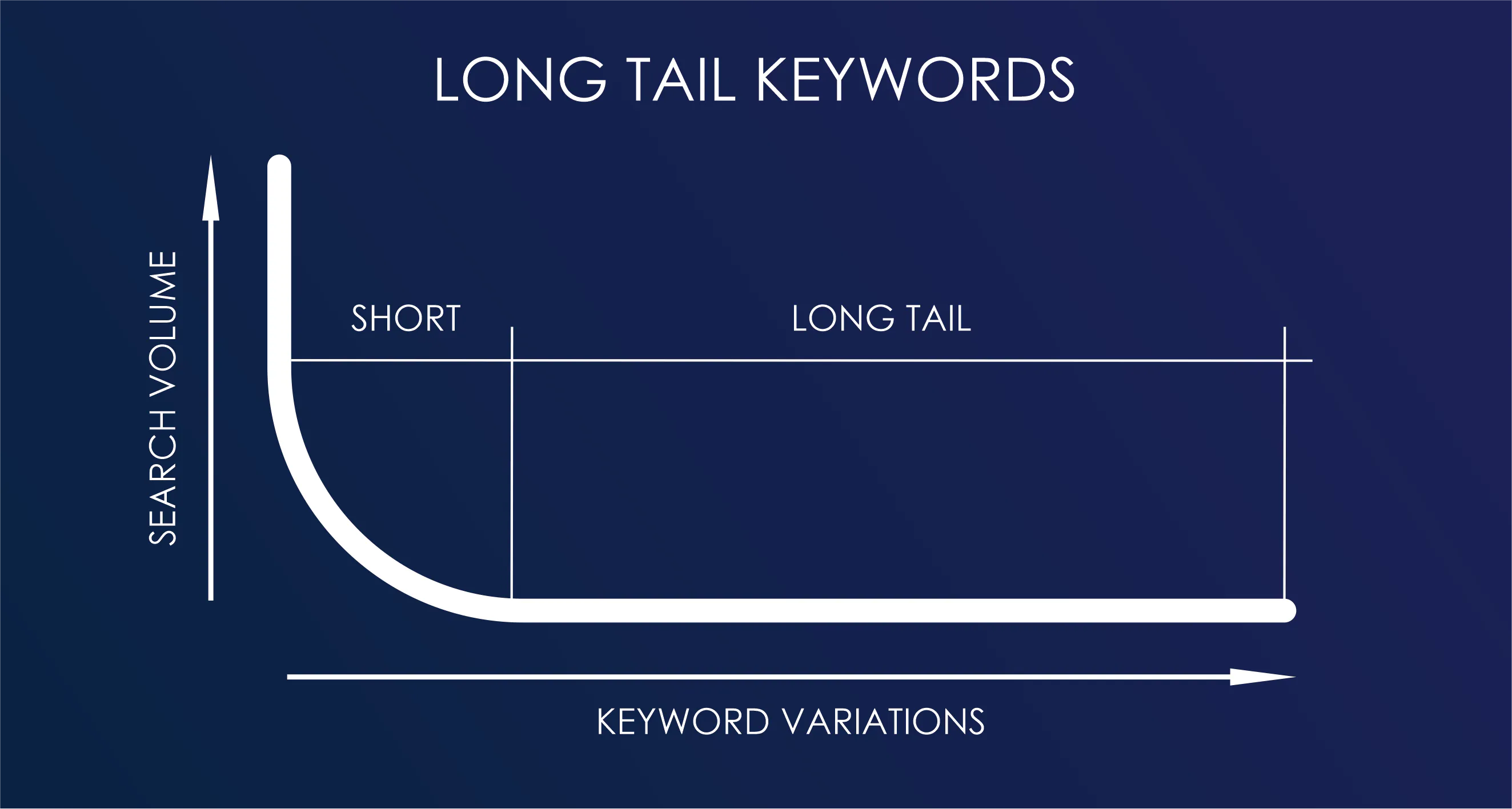
Big brands usually aim for big, shiny keywords because they want scale and simple reporting. It is easier to say “we rank for crypto exchange” than “we rank for 200 questions about failed swaps and gas fees,” and long-tail work feels messy because it needs more pages, more updates, and more care.
There is also a brand risk problem. If you are a huge company, you do not always want to publish pages like “Is our token safe?” or “Why did our bridge fail?” because it forces you to talk about scary topics, yet Web3 users search those scary topics every day, and if you answer them clearly you earn confidence through clarity rather than slogans.
Long-tail in Web3 is mostly about fear, friction, and fees
In Web3, long-tail searches are rarely “fun facts.” They are usually a person trying not to lose money, time, or face, so they want to know if a contract is real, if a wallet prompt is normal, or if a stablecoin is about to freeze.
That is why long-tail content works so well here. If your page solves one sharp problem, it can bring in the exact person who needs your product, your chain, or your service, and additionally those pages often get shared in Discords and Telegram chats because they answer the same questions support teams see all week.
What people are asking and what they mean
A common question is: “Are long-tail keywords still worth it in 2026 if AI answers everything?” People ask this because they think AI chat tools will replace search, however in practice AI tools still need source pages, and they often prefer pages that answer one question cleanly.
Another common one is: “How do I find long-tail keywords without expensive tools?” People ask this because keyword tools tend to show the same obvious phrases, so the better approach is to collect real questions from your community, support inbox, Reddit threads, and competitor reviews, then turn each question into a page that earns traffic over time.
How to find long-tail keywords in Web3 without guessing
Start with the places where people complain in public. Reddit posts, Discord support channels, and Telegram chats are basically a live feed of long-tail queries, and if you see the same question twice it is not random, it is demand.
Then, translate the messy question into a clean page title and a clean answer. For example, “My transaction is stuck and MetaMask shows pending forever” becomes a page that explains why it happens, what is safe to click, and what to avoid, and if you want a simple way to speed up results the approach in Proven Ways to Speed Up Web3 SEO Results fits well because it focuses on intent and execution rather than vanity.
The long-tail page format that wins citations and clicks
Long-tail pages work best when they get to the point fast. Give a short answer near the top, then explain it in plain language, then show steps, warnings, and examples, because people do not want a lecture when their funds are stuck.
Also, make the page easy to verify. Add screenshots, show exact error messages, and explain what a normal wallet prompt looks like, and if you are building a new Web3 brand the credibility signals in Building Trust Signals for New Web3 Projects in Search Results matter even more on these pages because the reader is already nervous.
Why long-tail pages convert better than broad pages
Broad keywords bring tourists. Long-tail keywords bring people with a problem in their hands right now, so that person is more likely to sign up, book a call, or try your product because they are not browsing, they are fixing.
This is also why long-tail is a great fit for B2B Web3. A founder searching “best custody setup for a DAO treasury” is not doing it for fun, therefore they want a clear answer that does not waste their time and gives them a next step they can act on.
The biggest mistakes Web3 teams make with long-tail
The first mistake is writing one mega page that tries to answer everything. That page becomes vague and it rarely wins, so instead one page should answer one question, and it should do it well.
The second mistake is forgetting internal linking. If you publish 50 helpful pages but they are not connected, Google and AI tools may miss them, and a simple internal linking system like the one in Master Internal Linking for Better SEO with Link Assistant Tips helps your long-tail pages support each other without feeling forced.
How to pick long-tail targets that big brands will not touch
Look for topics that are too specific, too annoying, or too support-heavy for big brands. Things like “why is my swap price different at checkout,” “what does slippage mean on Uniswap,” or “how to recover a token sent to the wrong chain,” and these are real searches that often have weak results.
Also, look for questions that include a chain name, wallet name, or error code. Those details make the keyword less competitive and they make the intent clearer, and if you keep your pages updated and accurate you can own that space while bigger brands fight over generic terms.
Where long-tail fits with AI answers
Some people worry that AI answers will steal the click. That can happen, however it usually happens when the web page is vague, or when it buries the answer under filler.
If you write a page that is clear, specific, and easy to quote, AI tools can still point people back to you, and Google can still rank you. If you are trying to show up inside AI summaries, the patterns in How to Dominate Google’s AI Overviews as a Web3 Business help because they focus on clarity, structure, and credibility.
Final Thoughts
Long-tail keywords are not a trick. They are just a record of what real people ask when they are confused, worried, or ready to act, and big brands often ignore those questions because they are not glamorous and because answering them takes effort.
For Web3 teams, that effort is the advantage. If you write clear pages that solve one problem at a time, you can win traffic, earn confidence, and get cited by AI tools, all without trying to outspend the giants.
Frequently Asked Questions
Why do long-tail keywords work so well in Web3?
Because Web3 users search for specific problems, often tied to safety, fees, and stuck transactions. Those searches have clear intent and usually weaker competition.
How many long-tail pages do I need to see results?
It depends, however a small set of well-written pages can start bringing traffic if they match real questions and stay updated.
Do long-tail keywords still matter if AI answers the query?
Yes, because AI tools still pull from web pages. If your page answers one question clearly, it is more likely to be used as a source.
Where do I find long-tail keywords without paid tools?
Use your support inbox, community chats, Reddit threads, and product reviews. If people ask it repeatedly, it is a keyword.
Should I target broad keywords first or long-tail first?
Long-tail first is usually faster for smaller teams, because you can win specific queries and build authority before you go after bigger terms.
_________________________________________________________________
Download your free copy of the Growth Engine Blueprint here and start accelerating your leads today.
Want to know how we can guarantee a mighty boost to your traffic, rank, reputation and authority in you niche?
Tap here to chat to me and I’ll show you how we make it happen.
If you’ve enjoyed reading today’s blog, please share our blog link below.
Do you have a blog on business and marketing that you’d like to share on influxjuice.com/blog? Contact me at rob@influxjuice.com.
Latest Blogs
- Why Web3 Teams Are Turning to Gamma to Build Decks and Docs Faster
- Cyber5 Prep for Web3 Brands: Get Your Paid Media Ready Before Costs Spike
- How AI Is Changing the Way Customers Find and Judge Web3 Brands
- BrandJet Review: The All-in-One Outreach CRM We Use at Influxjuice
- How I Fixed a Hacked WordPress Site With 30,000+ Malware Files for $0