

Your project ranks on Google. Your content is published. Your site is live. And when someone types ‘best DeFi lending protocol’ or ‘most reliable Web3 wallet’ into ChatGPT or Perplexity, your project does not appear. Competitors do.
This is one of the most common problems Web3 marketing teams are running into right now, and the answer is straightforward. AI search and Google are two completely different systems. A Google ranking does not carry over.
Research tracking over 30 million AI citations found that fewer than 15% of crypto projects have optimised for LLM discoverability at all. ChatGPT passed one billion monthly users in 2026.
Over 40% of users consult AI assistants before visiting traditional search results. The teams not showing up in those answers are invisible at the start of the buying process.
This covers the specific reasons your project is likely absent from AI-generated answers – from technical issues your site may not know it has, to content problems that make AI skip your pages entirely, to the off-site presence AI reads from when forming its answers.
_____________________________________________________________
Quick answers – jump to section
- AI Search and Google Are Not the Same System
- Where AI Gets Its Information From – And It Is Not Your Website
- The Technical Reasons AI Bots Cannot Read Your Site
- Your Content Has Nothing for AI to Extract
- Your Project Is Not in the Conversations AI Reads
- What to Do Next
- Final Thoughts
- Frequently Asked Questions
__________________________________________________________
AI Search and Google Are Not the Same System
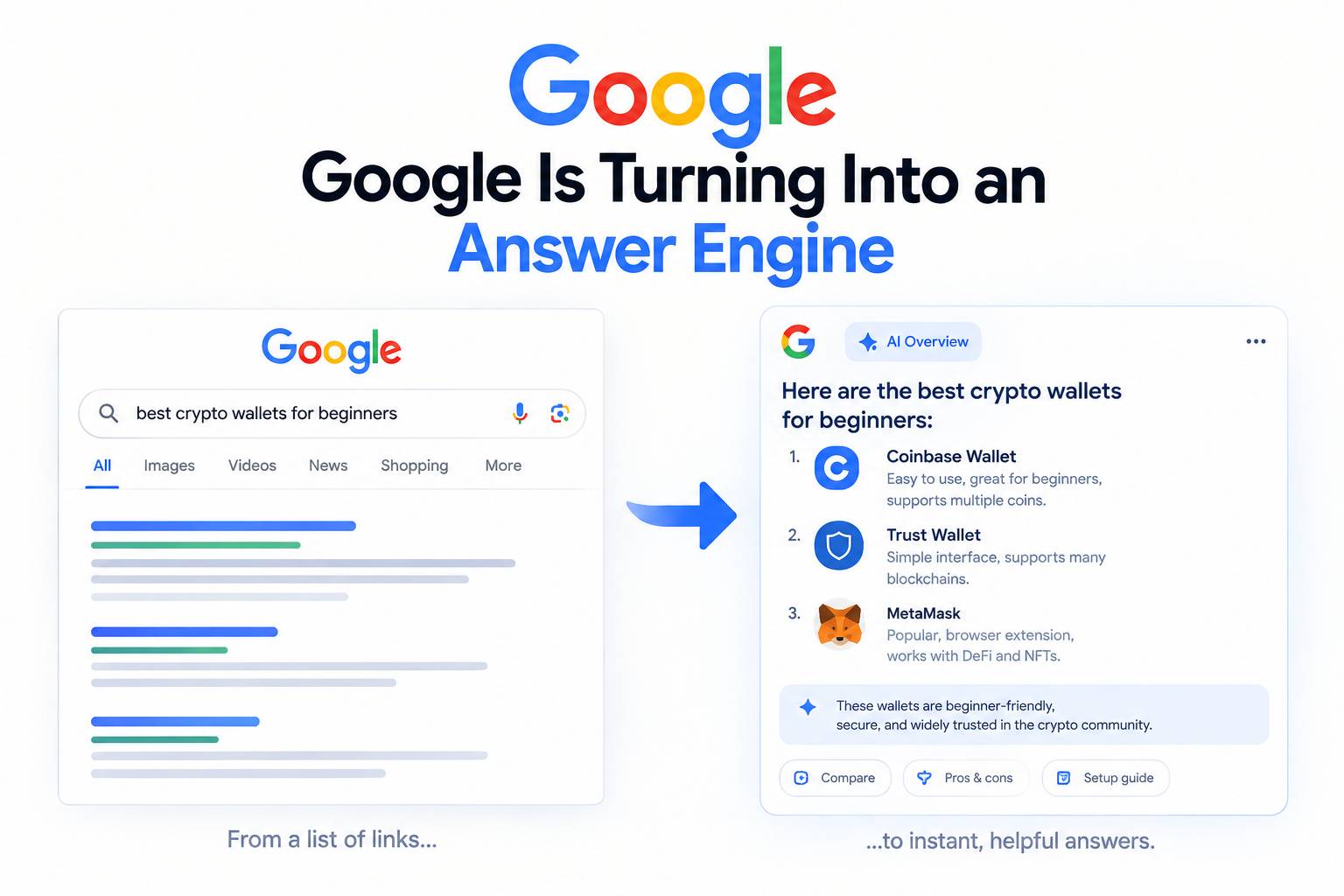
Google ranks pages. ChatGPT, Perplexity, and Google AI Overviews answer questions. Those are different jobs that use different signals. A page can sit at number one in Google and not be cited once across any AI platform.
Research from Ahrefs published in December 2025 found that 80% of LLM citations do not rank in Google’s top 100 for the same query.
That single number should change how Web3 teams think about search strategy. Ranking and being cited are different goals that require different work, and right now most crypto teams are only doing one of them.
The stakes of missing this are rising fast. Google AI Overviews now trigger on around 48% of desktop searches – up from roughly 9% just twelve months earlier.
When an AI answers a question about DeFi infrastructure or institutional crypto custody, it names two or three options and stops. There is no page two. There is no ‘see more results.’ If your project is not in that answer, it does not exist for that user.
AI search traffic also converts at 2.5 times the rate of standard organic traffic, which means the quality of visitors who arrive through AI recommendations is significantly higher than what most teams are used to seeing.
__________________________________________________________
Where AI Gets Its Information From – And It Is Not Your Website
This is the part most Web3 teams miss. When ChatGPT or Perplexity forms an answer about a crypto category, it is not primarily reading your homepage or your blog.
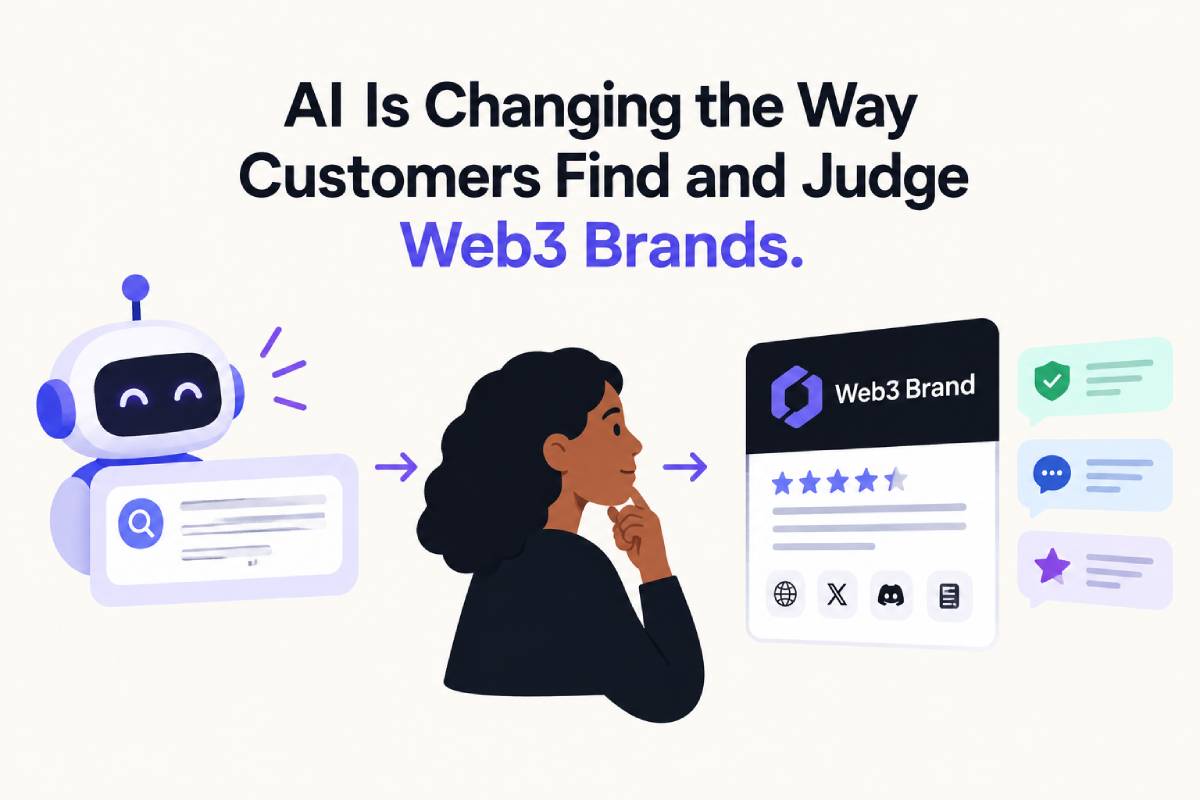
Research tracking 30 million citations found that 85% of AI citations come from earned media – publications like CoinDesk, Forbes, TechCrunch, and the Wall Street Journal – rather than brand-owned content.
A separate analysis found that brand websites appear in AI-generated responses only 9% of the time. Your project’s AI visibility depends far more on what other sources say about you than on what your own site says about itself.
One tier-1 media placement generates dozens of citations across different queries and platforms over time. A single mention in a CoinDesk comparison article or a TechCrunch announcement carries more weight than fifty pages of self-published content.
This is why offsite content creation and distribution to over 1000 platforms in 7 different formats is part of our 3-Way Growth Engine. Simply put: the larger your authoritative footprint across the web, the more likely AI models are to recognize your brand and cite you as the go-to expert.
This breakdown on how to earn AI citations and brand mentions in Web3 covers the specific sources that produce citations across ChatGPT, Perplexity, and Google AI Overviews, and how Web3 teams are building that presence systematically.
__________________________________________________________
The Technical Reasons AI Bots Cannot Read Your Site
Even when off-site coverage exists, technical issues on your own site can prevent AI from processing your content correctly. The most common problem is a robots.txt file blocking AI crawlers. Many Web3 sites added bot-blocking rules during earlier periods of heavy scraping and left them in place.
If your robots.txt is blocking GPTBot, ClaudeBot, or Google-Extended, those AI systems cannot read your pages regardless of what the content says. Checking this takes five minutes and is the first thing any AI visibility audit should cover.
Structured data is the second gap. Without schema markup that tells AI what type of entity your project is, what it does, and how it relates to other entities in the Web3 space, AI systems have to guess.
Guessing produces inconsistent results, which means your project gets categorised poorly or skipped when a relevant query comes in. A clear entity definition in your structured data tells AI systems how to think about your project across every query they get asked.
This walkthrough on entity-based SEO for Web3 teams covers how to build those definitions in practice.
__________________________________________________________
Your Content Has Nothing for AI to Extract
AI systems look for extractable answers. When a user asks ChatGPT ‘what is the best DeFi protocol for yield,‘ the model scans its training data and real-time indexed content looking for text it can lift a clear, direct answer from. Dense paragraphs of explanation, vague category descriptions, and marketing copy do not get cited.
Direct answers, named comparisons, and structured Q&A sections do. Research from Ekamoira published in January 2026 found that 44.2% of all LLM citations come from the first 30% of a page’s content.
Pages with a TL;DR, a direct answer block, and a named framework near the top earn 2.3 times more citations than unstructured long-form content.
Most Web3 project pages are built for browsers, not for extraction. They open with a tagline, lead into a features list, and bury any real substance three screens down. AI reads differently.
It wants the answer in the first few paragraphs, written in plain language, structured so it can be lifted and quoted without context.
This breakdown on how to write content that ChatGPT and Gemini quote covers the exact structural changes that produce citations across multiple AI platforms.
__________________________________________________________
Your Project Is Not in the Conversations AI Reads
AI search pulls from a different content graph than Google. Google reads pages. AI reads conversations – Reddit threads, community discussions, comparison articles, Q&A platforms, and forums where real people discuss specific projects by name.
If your project does not appear in those conversations for the queries your buyers are asking, AI systems have nothing to pull from when they form an answer. Practitioners tracking citation patterns have found that a single Reddit thread discussing your protocol can produce more AI citations than your own product page.
The practical implication is that your off-site presence in conversational sources carries significant weight in AI search visibility.
Web3 teams that participate in real community discussions, earn mentions in independent comparison pieces, and get referenced in third-party analyses of their category will appear in AI answers. Teams that publish only to their own site and wait will not.
This piece on AEO and GEO as the missing parts of Web3 growth covers how answer engine optimisation and generative engine optimisation work together as a connected strategy rather than two separate projects.
__________________________________________________________
What to Do Next
The path from invisible to cited in AI search is not a single fix. It starts with checking and resolving any technical access issues – robots.txt, structured data, sitemap coverage – so AI systems can read your site correctly.
From there, it means restructuring key pages so the first 30% of the content contains a clear, direct answer to the question that page is meant to address.
Alongside that, it means building the off-site presence – media placements, community mentions, independent coverage – that AI pulls from when forming its answers.
None of these produce overnight results. AI citations build over time as your project gains presence in the sources those systems read. Technical fixes can speed things up once AI crawlers can access your pages properly.
Earned media and community presence compound over months. The teams starting this work now are the ones whose projects will show up in AI answers six months from now.
If you want fast results with no authority, run ads. If you want to build authority and a strong reputation in your niche, improve your onsite and offsite content. If you want both, speak to us about how we can do it all for you.
__________________________________________________________
Final Thoughts
Ranking on Google and appearing in AI search are two different goals, and in 2026 the second one is where purchasing decisions are increasingly being made. Over 40% of users consult AI assistants before visiting traditional search results.
Fewer than 15% of crypto projects have done anything to appear in those answers. That gap represents a significant amount of visibility sitting unclaimed.
If you want to understand specifically where your project is losing AI visibility and what it would take to fix it, get in touch with the Influxjuice team.
We work with Web3 teams on AI search audits and build the strategy to close the gaps.
__________________________________________________________
Frequently Asked Questions
Why does my project rank on Google but not appear in ChatGPT?
Google and AI search use different signals. Research shows that 80% of LLM citations do not rank in Google’s top 100 for the same query.
Ranking on Google and being cited by AI are separate outcomes that require different strategies.
What do AI systems actually read when forming answers about crypto?
Primarily earned media – publications like CoinDesk, Forbes, and TechCrunch, along with community discussions, comparison articles, and third-party analyses.
Brand-owned websites account for around 9% of AI-generated responses.
Does my robots.txt file affect AI search visibility?
Yes. If your robots.txt blocks AI crawlers like GPTBot, ClaudeBot, or Google-Extended, those AI systems cannot read your pages.
Many Web3 sites added bot-blocking rules during earlier periods and left them in. Checking this is one of the first technical fixes to make.
What type of content does AI prefer to cite?
Direct answers structured at the top of the page, named frameworks, clear Q&A sections, and content that answers a specific question in plain language.
Research shows 44.2% of all LLM citations come from the first 30% of a page’s content. Dense, unstructured paragraphs are typically skipped.
How do I check whether my project is appearing in AI search results?
Run the queries your buyers would use in ChatGPT, Perplexity, and Google AI Overviews. Log what comes back and whether your project is named.
Tools like seoforgpt.io can automate this process across multiple platforms if you need to track it consistently.
How long does it take for AI search visibility to improve?
Technical fixes can have faster effects once AI systems can access your site correctly.
Earned media and community presence build over months rather than days.
Citation patterns compound over time, so the earlier a project starts, the stronger the position it builds.
_________________________________________________________________
Get your free 12-Month Growth Plan Diagnostic here.
Answer a few question to get your blueprint to follow and secure your revenue goals over the next 12-months.
Want to know how we can guarantee a mighty boost to your traffic, rank, reputation and authority in you niche?
Tap here to chat to me and I’ll show you how we make it happen.
If you’ve enjoyed reading today’s blog, please share our blog link below.
Do you have a blog on business and marketing that you’d like to share on influxjuice.com/blog? Contact me at rob@influxjuice.com.
Latest Blogs
- Why YouTube Plays Such a Big Role in Web3 Research and Buyer Confidence
- How to Edit Professional Videos for Your Business on a Budget
- The Fake Podcast Scam: How a LinkedIn Invitation Nearly Put Malware on My Mac
- Why Google Is Turning Into an Answer Engine, and What It Means for Web3 Teams
- Why Web3 Teams Are Turning to Gamma to Build Decks and Docs Faster