
A customer used to start with a click. They searched, clicked a link, landed on your site, and your analytics counted them. Now many journeys begin in an AI answer, a Google summary, a YouTube video, or a community thread. The buyer may know your name before they ever visit.
So what should a web3 team measure now? This post covers the four things you need to track:
- If you show up in answers
- If people look for you by name afterward
- If visits turn into actions like wallet connects
- What buyers say about how they found you.
_____________________________________________________________
Quick Answers – Jump to Section
- When the Journey No Longer Starts With a Click
- Measure Visibility Before the Visit
- Measure Demand Signals After the Answer
- Measure What Happens at the Wallet
- Final Thoughts
- Frequently Asked Questions
__________________________________________________
When the Journey No Longer Starts With a Click
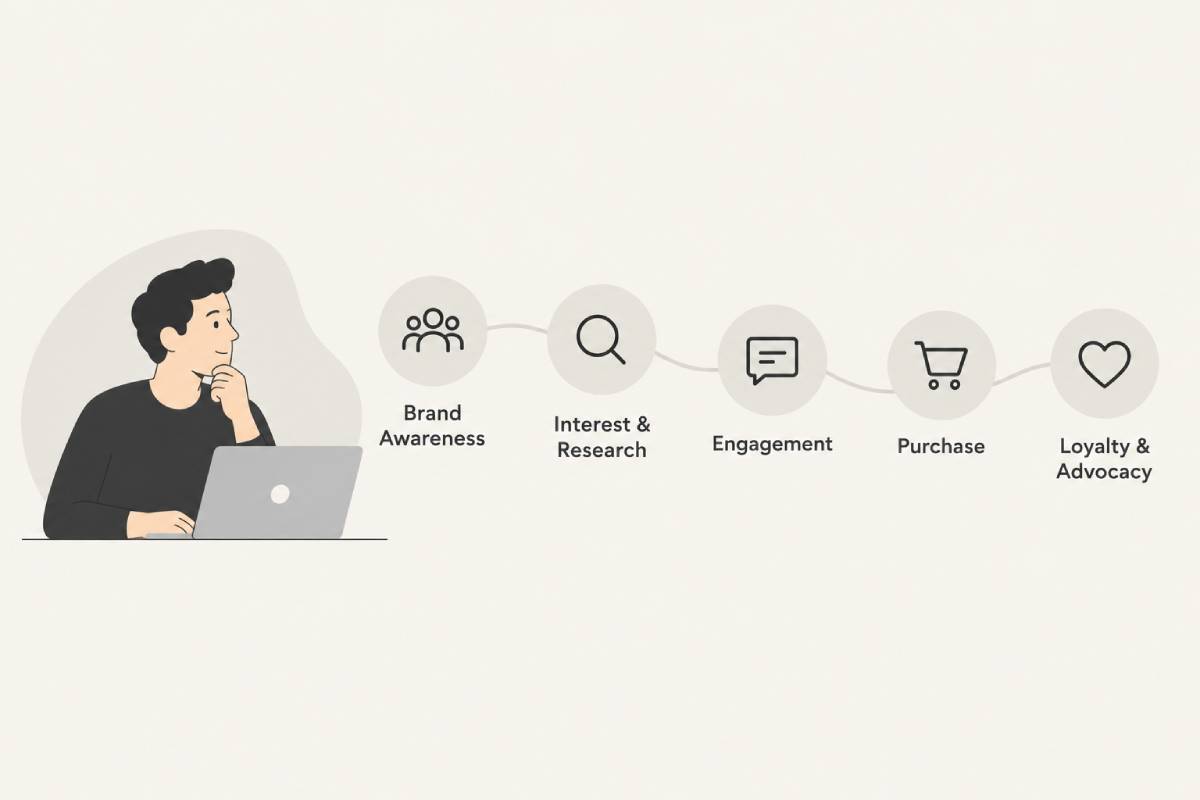
The old path was simple. Someone searched, clicked a result, visited your site, and signed up. The last click got the credit.
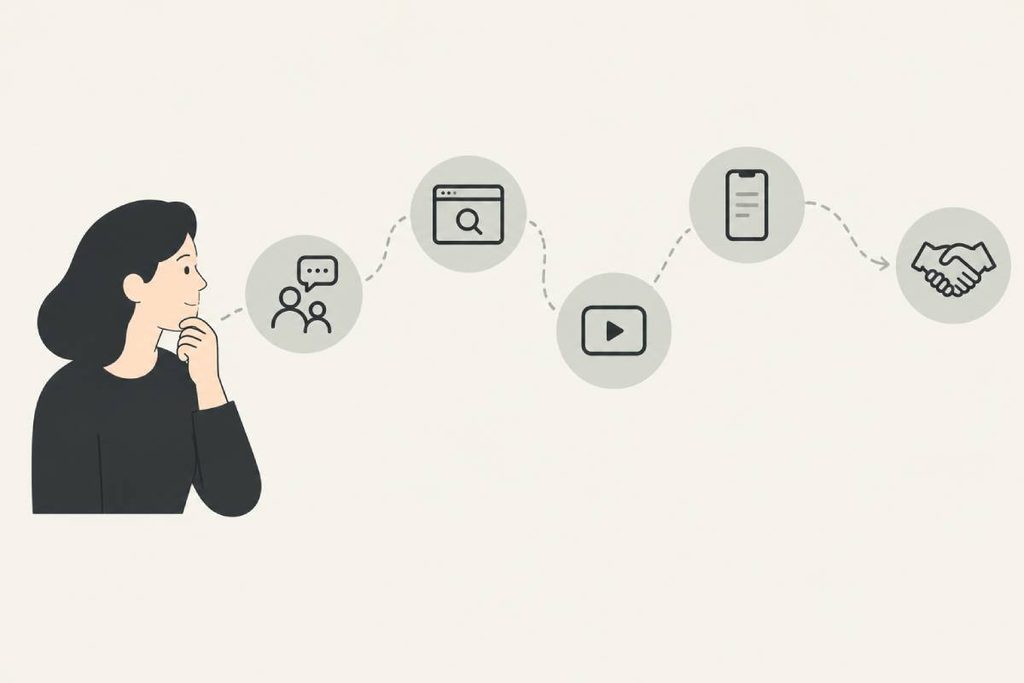
The new path is less simple. A person asks an AI tool, “What is a low-cost way to stake ETH?” They see a shortlist. They watch a video. They read a Discord thread. A week later, they type your name into Google. Your report shows that visit as “direct” or “branded search.” The work that earned it stays invisible.
This is risky, because teams often cut what they cannot see. They stop making the videos, the explainers, and the community replies that built the interest. Then growth slows, and nobody knows why. If this sounds familiar, why marketing reports often tell web3 teams the wrong story explains where the gaps come from.
Clicks still count. They have just moved from the starting line to the middle of the race.
__________________________________________________
Measure Visibility Before the Visit
Start by checking if you show up when buyers ask. Pick 15 to 20 questions your buyers really ask. Ask each one in ChatGPT, Gemini, and Perplexity. Do this every month, using the same questions, and log the answers in a simple sheet.
Track these five things:
- AI mentions: Are you named in the answer?
- Citations: Does the tool link to your pages? Which pages?
- Share of answers: Out of 20 questions, in how many does your brand appear, compared with your rivals?
- Accuracy: Are your fees, features, and supported chains described correctly?
- Google features: Do you appear in AI summaries and answer boxes? Search Console impressions can help here, since a page can be seen without being clicked.
Over time, the trend line tells the story. For a deeper method, see how to measure success in AI-driven search for web3 growth.
__________________________________________________
Measure Demand Signals After the Answer
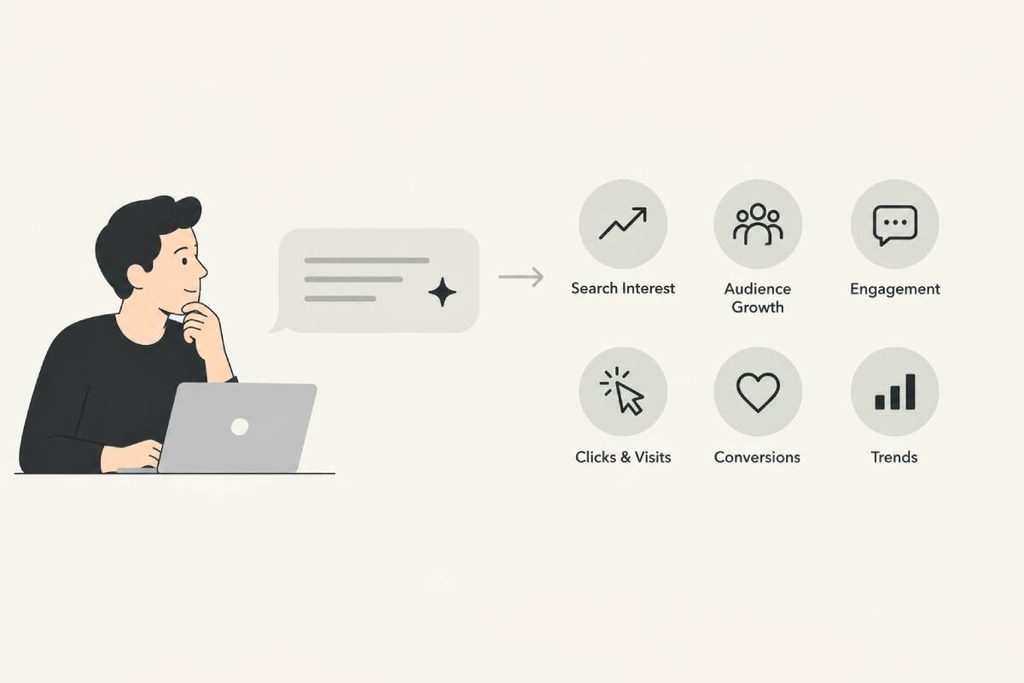
Once people see you, some will look for you by name. These signals show that your visibility is working, even when no click shows it.
- Branded search: In Search Console, watch searches that include your brand name. A steady rise is a good sign.
- Direct and returning visits: More people typing your address or coming back means your name is sticking.
- Self-reported source: Add an open box to your sign-up form or onboarding that asks, “How did you hear about us?” People often write “ChatGPT,” “YouTube,” or “a friend in Discord.” Software reports will never show that.
- Community mentions: Count how often your brand comes up in Discord, X, and Reddit, and what people ask about it.
- Video activity: Track views, watch time, and comments.
Treat these as signals, not proof. Look for patterns across months instead of one-week spikes. A few well-chosen reports make this easier, and GA4 reports web3 teams can use to spot rising demand is a good place to begin.
__________________________________________________
Measure What Happens at the Wallet
Visibility and interest are only half the story. Next, check what people do. In web3, the real action often happens at the wallet.
Track these outcomes:
- Wallet connects: How many visitors connect a wallet?
- First on-chain action: How many make a first swap, stake, mint, or deposit?
- Time to first action: How long does it take from first visit to first action?
- Repeat use: How many come back within 30 days?
- Conversion by source: Do visitors who arrive after AI answers convert better than others? They often arrive better informed.
Here is a simple scorecard to pull it together:
| Stage | What to track | Where to look |
|---|---|---|
| They see you | AI mentions, citations, share of answers | Monthly prompt checks |
| They look for you | Branded search, direct visits, self-reported source | Search Console, forms |
| They act | Wallet connects, first on-chain action, 30-day return | Analytics plus on-chain tools |
To connect web visits with on-chain behavior, look at the tools web3 founders use to track on-chain user behavior.
__________________________________________________
Final Thoughts
The click did not die, it just moved. Many journeys now start with an answer, a video, or a conversation, long before a visit. So measure three stages: do they see you, do they look for you, and do they act?.
Check AI answers each month, watch branded search and self-reported sources, and follow real actions at the wallet. Keep the scorecard simple and review it on the same day each month. That way, the work that builds your name finally gets the credit it earns.
__________________________________________________
Frequently Asked Questions
What should I measure when the customer journey does not start with a click?
Measure three stages: if you appear in AI and Google answers, if people search for your brand afterward, and if visits lead to real actions like wallet connects.
How do I know if AI tools mention my web3 brand?
Ask ChatGPT, Gemini, and Perplexity the same 15 to 20 buyer questions each month. Log if you appear, if your pages are cited, and if the details are right.
Why does my traffic look flat when interest seems to be growing?
Many people see your brand in an answer or a video, then search for you later. Those visits show up as direct or branded traffic, so the work behind them goes uncredited.
What is self-reported attribution?
It is a simple question on a form, such as “How did you hear about us?” People answer in their own words, which reveals sources that analytics tools miss.
Which metrics show real results in web3?
Look at wallet connects, first on-chain actions, time to first action, and 30-day repeat use. These show whether interest turns into real use.
How often should I review these numbers?
Once a month works well for many teams. Use the same questions and the same sheet so the trend lines are easy to compare.
_________________________________________________________________
Download your free copy of the Growth Engine Blueprint here and start accelerating your leads.
Want to know how we can guarantee a mighty boost to your traffic, rank, reputation and authority in you niche?
Tap here to chat to me and I’ll show you how we make it happen.
If you’ve enjoyed reading today’s blog, please share our blog link below.
Do you have a blog on business and marketing that you’d like to share on influxjuice.com/blog? Contact me at rob@influxjuice.com.
Latest Blogs
- What to Measure When the Customer Journey No Longer Starts With a Click
- Why Early Days Club Is a Smart Move for Early-Stage Founders (and How to Get 80% Off)
- How to Build One Content Strategy That Works Across Google, YouTube, AI Tools, and LinkedIn
- Why YouTube Plays Such a Big Role in Web3 Research and Buyer Confidence
- How to Edit Professional Videos for Your Business on a Budget