

Digital asset platforms face a challenge most other industries do not. Paid advertising on Google and Meta is restrictive for crypto and blockchain products, which makes organic search the primary way to build consistent, qualified traffic. In 2026, that organic channel is more competitive and more structured than it has ever been – and the platforms doing it well are pulling ahead of the ones still guessing.
What follows covers the SEO approach that works for digital asset platforms right now. From the technical foundations Google expects before it ranks anything, to the content and AI search strategies that determine long-term visibility, this is the full picture for Web3 teams ready to build something that compounds.
_____________________________________________________________
Quick answers – jump to section
- Why SEO Is Non-Negotiable for Digital Asset Platforms
- Build the Technical Foundation First
- Keyword Strategy That Works for Digital Assets
- Content That Builds Authority in a YMYL Category
- AI Search and Zero-Click Visibility
- Final Thoughts
- Frequently Asked Questions
_________________________________________________________
Why SEO Is Non-Negotiable for Digital Asset Platforms

Google Ads restricts crypto and blockchain products in most regions, and Meta follows a similar path. This leaves organic search as the one channel digital asset platforms can rely on for consistent, qualified traffic – without approval delays, sudden policy changes, or ad spend that disappears the moment you stop paying.
A platform ranking on page one for a search like ‘secure stablecoin wallet‘ or ‘how to buy tokenised assets’ is being found by someone who already knows what they want. That is a very different kind of attention.
The volume of organic traffic available to digital asset platforms in 2026 is substantial, but the standard for ranking has risen with it. Google treats financial content as YMYL – Your Money, Your Life – which means it applies a higher level of scrutiny to credibility signals, author expertise, and site quality.
Getting to page one in this category takes a clear strategy, not just content volume, and this breakdown on how digital asset teams use Google for organic traffic covers the specific foundations that separate platforms with real visibility from those sitting on page three.
_________________________________________________________
Build the Technical Foundation First
Before content or keywords can produce results, the technical side of your site has to work correctly. Google needs to crawl your pages, index them, and understand what they cover.
For digital asset platforms, this often means dealing with JavaScript-heavy builds, wallet connection flows, or app-like interfaces that search engine crawlers struggle to read. If the crawler cannot read the page, the page does not rank – and no amount of content strategy changes that.
Entity-based SEO is where most Web3 teams gain early ground. Rather than trying to rank for a keyword in isolation, entity SEO helps Google recognise your brand as a known entity – what it does, what it relates to, and where it sits in the Web3 space. Schema markup, structured data, and a consistent knowledge panel presence all contribute to building that identity.
This entity-based SEO walkthrough for Web3 teams covers how to build that foundation in practical terms, and it is the step most platforms skip entirely.
_________________________________________________________
Keyword Strategy That Works for Digital Assets
Head terms like ‘crypto platform’ or ‘DeFi exchange’ are dominated by the largest players and extremely difficult to rank for on a standard content budget. Long-tail keywords are where digital asset platforms consistently find traction.
A phrase like ‘how to stake ETH without custodial risk’ has a fraction of the competition, a clear user intent, and a user who is much closer to taking action. The path to ranking for broader terms starts by ranking for the specific ones first.
Search intent is equally important and frequently overlooked. Someone searching for ‘best crypto wallet 2026’ wants a comparison. Someone searching ‘how does a non-custodial wallet work’ wants an explanation. These are different pages with different structures, and one piece of content that tries to serve both will do neither well.
Mapping your content to intent before writing anything is the fastest route to traction, and this breakdown on Web3 search intent covers the method in full.
_________________________________________________________
Content That Builds Authority in a YMYL Category
Google holds digital asset content to a high standard. Any content that touches investments, financial security, or asset management falls under YMYL, which means Google looks hard at who wrote it, whether they have real credentials, and whether the site as a whole reflects genuine expertise.
This hits harder in crypto because many platforms in this space lack clear author attribution, have thin content, or publish information with no verifiable source behind it. Those are easy ways to lose ground to platforms that do it properly.
The way to build authority over time is through original content that carries your team’s actual knowledge. Data from your own platform – user behaviour, transaction volumes, onboarding performance, security records – is content Google cannot find anywhere else, and has reason to surface.
Publishing two well-sourced, expert-led pieces per month will outperform ten generic ‘what is DeFi’ posts every time. That approach takes discipline, but it is the one that compounds and protects your position from competitors publishing at volume.
_________________________________________________________
AI Search and Zero-Click Visibility
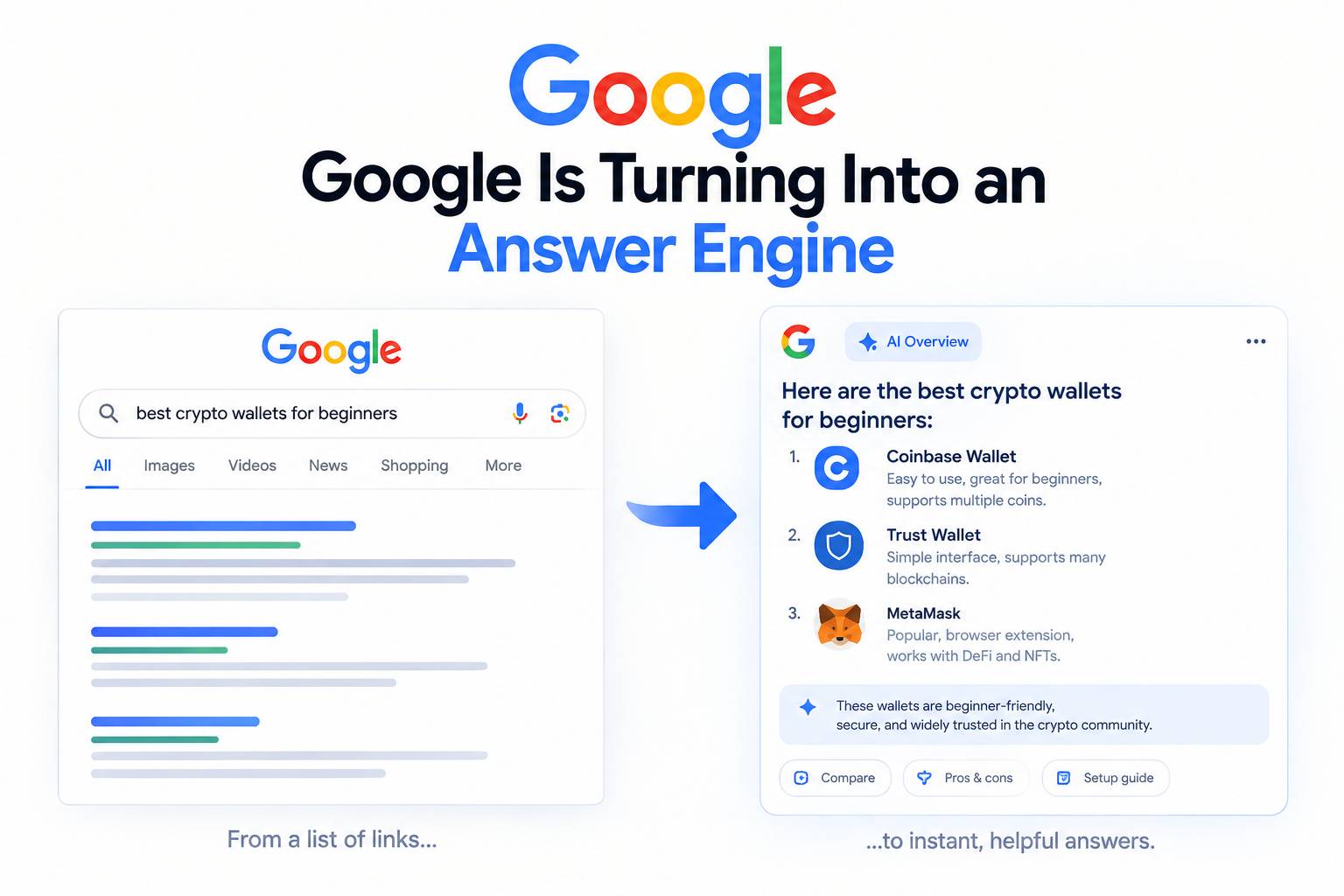
AI Overviews now appear on nearly half of all Google searches, and zero-click searches account for roughly 60% of queries in 2026. For digital asset platforms, this creates a real opportunity alongside the traffic concern.
A platform that earns a citation in an AI Overview for a question like ‘how does a yield protocol work’ is getting brand exposure at the top of the page with no paid spend involved. That is the kind of visibility that paid restrictions make even more valuable in this category.
Getting cited in AI results comes down to content structure, credibility, and specificity. Short, direct answers to common questions, FAQ sections with schema markup, clear heading hierarchy, and content that references real data all improve the chances of being selected. Keyword-stuffed copy and thin pages are the fastest way to be passed over entirely.
This closer look at earning AI citations in Web3 covers what that content structure looks like in practice for blockchain and digital asset teams.
_________________________________________________________
Final Thoughts
SEO for digital asset platforms in 2026 is not a single tactic. It is a stack: technical foundations that let the site be indexed, keyword and intent mapping that guides what gets written, content that carries real expertise, and a structure that makes it easy for AI tools to read and cite.
Each layer depends on the one below it, and skipping any of them creates a ceiling that content volume alone cannot break through.
The platforms building organic visibility right now are doing so with consistency and specificity, not just output. They are publishing content their users need, answering questions in full, and building an entity presence Google can recognise.
That is a longer play, but it is also the only one that builds something durable in a category where paid options are limited and restricted by design.
_________________________________________________________
Frequently Asked Questions
Why is SEO more important for digital asset platforms than paid advertising?
Most major ad platforms restrict or ban crypto and blockchain products.
Organic search is the most reliable channel for consistent, qualified traffic that does not depend on ad policy approvals.
What does YMYL mean for digital asset SEO?
YMYL stands for Your Money, Your Life – a classification Google applies to content that could affect a person’s financial security.
Pages in this category are held to a higher standard for credibility, author expertise, and overall site quality.
How long does SEO take to produce results for a digital asset platform?
Most platforms see meaningful organic traffic movement within three to six months, assuming technical foundations are solid and content is published consistently.
Competitive terms take longer to rank for than specific, long-tail queries.
What schema markup should a digital asset platform use?
Organisation schema, FAQ schema, Article schema, and BreadcrumbList schema are the most useful starting points.
These help Google parse content and surface it in structured formats including AI Overviews.
Is long-tail keyword targeting realistic for larger digital asset platforms?
Yes, and it is recommended regardless of platform size.
Long-tail content builds topical authority, ranks faster, and attracts users with higher purchase intent than broad, competitive terms.
_____________________________________________________________
Get your free 12-Month Growth Plan Diagnostic here. It will deliver a blueprint needed to secure your revenue goals over the next 12-months.
Want to know how we can guarantee a mighty boost to your traffic, rank, reputation and authority in you niche?
Tap here to chat to me and I’ll show you how we make it happen.
If you’ve enjoyed reading today’s blog, please share our blog link below.
Do you have a blog on business and marketing that you’d like to share on influxjuice.com/blog? Contact me at rob@influxjuice.com.
Latest Blogs
- Why YouTube Plays Such a Big Role in Web3 Research and Buyer Confidence
- How to Edit Professional Videos for Your Business on a Budget
- The Fake Podcast Scam: How a LinkedIn Invitation Nearly Put Malware on My Mac
- Why Google Is Turning Into an Answer Engine, and What It Means for Web3 Teams
- Why Web3 Teams Are Turning to Gamma to Build Decks and Docs Faster