
A small business in Europe often waits thirty, sixty, or ninety days to get paid on an invoice. Its own bills come due much sooner.
Banks used to be the only fix for that gap, and getting approved could take weeks. Invoice tokenization changes that picture.
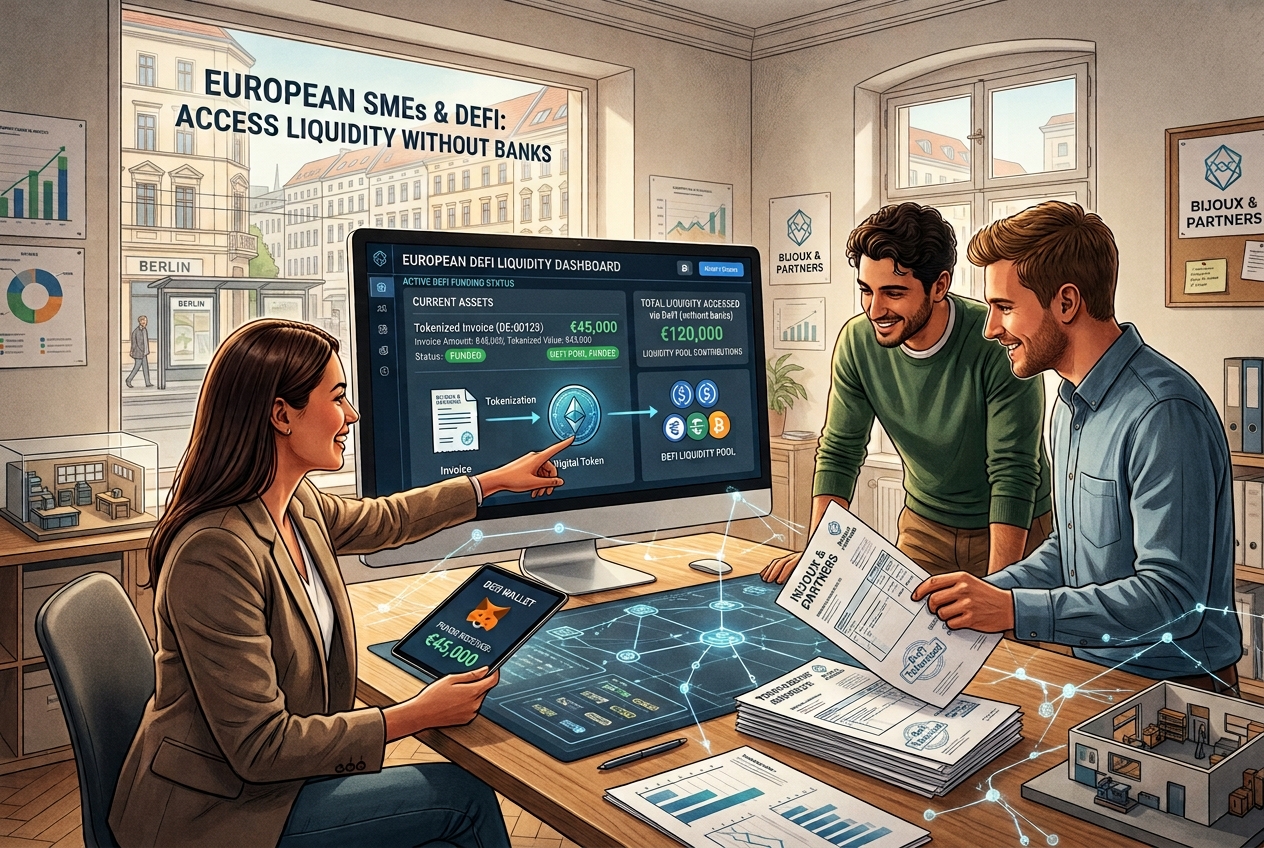
It turns an unpaid invoice into a digital asset. That asset can be sold or used as collateral on a DeFi platform within hours, not weeks.
This piece covers how the process works. It shows why European SMEs are turning to it. It also covers what risks come with skipping a bank entirely.
_____________________________________________________________
Quick answers – jump to section
- What Invoice Tokenization Means
- Why European SMEs Are Turning to DeFi Instead of Banks
- How the Process Works Step by Step
- The Risks Worth Understanding Before You Start
- Where This Trend Is Headed Next
- Final Thoughts
- Frequently Asked Questions
_____________________________________________________________
What Invoice Tokenization Means

An unpaid invoice is really just a promise. A client agrees to pay a set amount by a set date, and the business waits. Tokenization turns that promise into a digital token. The token is backed by the invoice itself, and it can then be sold or used as collateral.
Once tokenized, the invoice can be traded on a DeFi marketplace. It can also be offered to lenders who compete to buy it at a discount. The business gets cash today, often within a day. The buyer collects the full invoice amount later, earning the difference as their return.
This idea isn’t new. Similar mechanics show up in how DeFi lending protocols are starting to replace invoice factoring for African SMEs. The same core problem, cash flow delay, gets solved with the same basic tool.
_____________________________________________________________
Why European SMEs Are Turning to DeFi Instead of Banks
Bank loans built around invoices, known as invoice factoring, come with paperwork and credit checks. Waiting periods can stretch for weeks. Many smaller European businesses don’t meet the strict criteria banks apply. Newer companies without years of financial history often struggle the hardest.
DeFi platforms skip a lot of that friction. A tokenized invoice can be evaluated and funded by a pool of lenders in hours.
The smart contract handling the deal checks the invoice data directly, instead of running a manual credit review. For a business with a real, verifiable client, that speed can matter more than a slightly better bank rate. A bank might still take a month to decide.
_____________________________________________________________
How the Process Works Step by Step
A business first uploads the invoice details to a tokenization platform. This includes the buyer’s information, the amount owed, and the due date. The platform verifies the invoice. It often checks it against the client’s payment history or credit standing.
Once verified, the invoice becomes a token representing that specific claim. This token gets listed on a lending pool or marketplace, where lenders can fund all or part of it. The business receives funds almost immediately, minus a discount that reflects the lender’s fee and risk.
When the client eventually pays the invoice, the funds flow back to settle the token, and the deal closes.
This approach shares real similarities with how tokenized real assets empower web3 investors. Both processes turn a real-world claim into something that can move and settle on-chain.
_____________________________________________________________
The Risks Worth Understanding Before You Start
Skipping a bank doesn’t mean skipping risk. If the client on the invoice never pays, the tokenized asset can lose its value fast. The lender who funded it absorbs that loss. Some platforms offer insurance or recourse options, but not all do. Checking the fine print is vital here.
Regulation adds another layer worth understanding, especially for businesses operating across EU borders. A platform working within the rules will typically address the kinds of checks covered in passing EU DeFi compliance checks.
Invoice tokenization touches both securities-like assets and cross-border payment rules, depending on how it’s structured. A business should confirm a platform meets these standards before committing real invoices to it.
_____________________________________________________________
Where This Trend Is Headed Next
Invoice tokenization sits inside a bigger change. Real-world assets are moving onto blockchain rails at a growing pace. Interest from institutional players is growing too.
Some of the clearest examples show up in real-world asset tokenization projects already making institutional money in 2026. That signals this isn’t a niche experiment anymore.
As more European SMEs test the model and share results, expect faster onboarding. Better pricing from competing lenders should follow. Clearer regulatory guidance from EU bodies watching this space should arrive too.
Early adopters stand to gain the biggest advantage. Better terms tend to flow toward businesses with a track record on these platforms already.
_____________________________________________________________
Final Thoughts
Invoice tokenization gives European SMEs a real alternative to waiting on banks for cash tied up in unpaid invoices. It trades some of the safety net a bank provides for speed and lower barriers to entry.
It also opens access to a wider pool of lenders willing to compete for the deal. For a business with strong, verifiable clients, that trade can be a smart one.
Start by researching one or two established platforms. Check their compliance credentials carefully. Test the process with a single invoice before committing a larger share of your receivables to it.
_____________________________________________________________
Frequently Asked Questions
What is invoice tokenization in simple terms?
It’s the process of turning an unpaid invoice into a digital token. That token can be sold or used as collateral, letting a business get paid faster than waiting for the client’s normal payment terms.
Is invoice tokenization legal for SMEs in Europe?
Yes, though the specific rules depend on how a platform structures the tokens. They also depend on which EU regulations apply to the transaction. Working with a platform that follows clear compliance standards reduces legal risk significantly.
How fast can a business get cash through invoice tokenization?
Many platforms fund a verified invoice within a day. Compare that to weeks for a traditional bank loan or factoring arrangement. The speed comes from automated verification rather than manual credit review.
What happens if the client never pays the tokenized invoice?
The lender who funded the token typically absorbs that loss, unless the platform offers insurance or recourse protection. This is why checking a platform’s default handling policy matters before using it.
_________________________________________________________________
Get your free 12-Month Growth Plan Diagnostic here.
Answer a few question to get your blueprint to follow and secure your revenue goals over the next 12-months.
Want to know how we can guarantee a mighty boost to your traffic, rank, reputation and authority in you niche?
Tap here to chat to me and I’ll show you how we make it happen.
If you’ve enjoyed reading today’s blog, please share our blog link below.
Do you have a blog on business and marketing that you’d like to share on influxjuice.com/blog? Contact me at rob@influxjuice.com.
Latest Blogs
- Why Web3 Teams Are Turning to Gamma to Build Decks and Docs Faster
- Cyber5 Prep for Web3 Brands: Get Your Paid Media Ready Before Costs Spike
- How AI Is Changing the Way Customers Find and Judge Web3 Brands
- BrandJet Review: The All-in-One Outreach CRM We Use at Influxjuice
- How I Fixed a Hacked WordPress Site With 30,000+ Malware Files for $0