
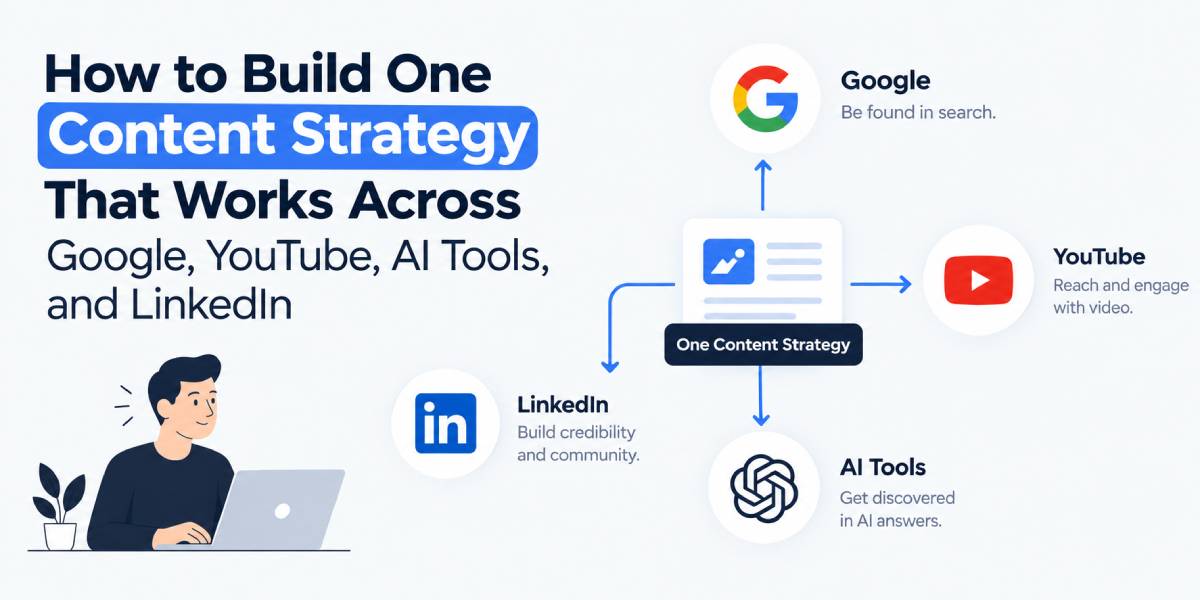
People now look for web3 brands in many places. They check Google, watch YouTube, ask ChatGPT-style tools, scroll LinkedIn, and read community threads. Making a new plan for each place would burn out any small team.
The answer is simpler: build one strong core topic and one plain message, then reshape it for each platform. This post covers how to pick that core, what each platform wants, how to turn one idea into many formats, and how to keep the whole system running.
_____________________________________________________________
Quick Navigation – Table of Contents
- Start With One Core Topic, Not Five Channel Plans
- Know What Each Platform Wants
- Turn One Idea Into Many Formats
- Keep It Running With a Simple Calendar and Scorecard
- Final Thoughts
- Frequently Asked Questions
_____________________________________________________________
Start With One Core Topic, Not Five Channel Plans
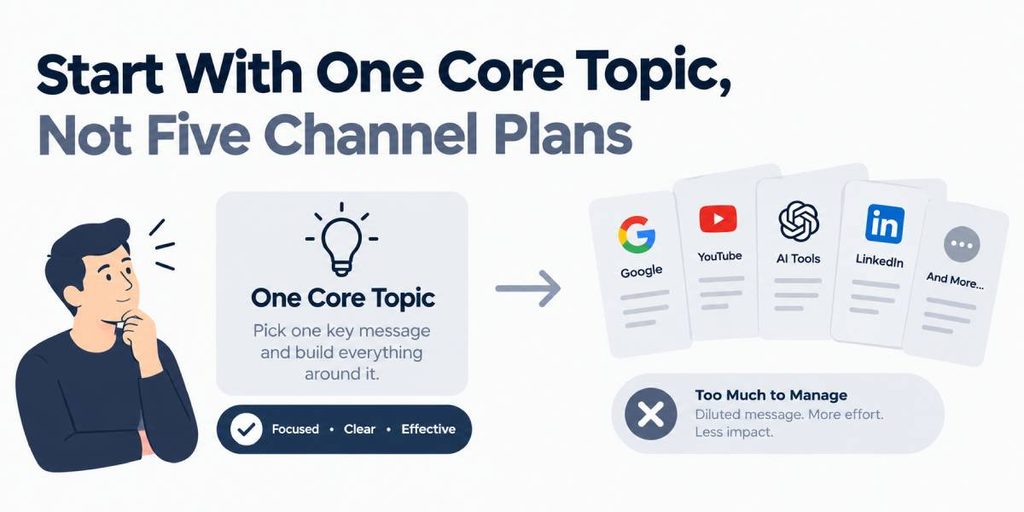
Here is a common mistake. A team writes one plan for Google, another for YouTube, a third for LinkedIn, and so on. Soon each channel tells a slightly different story. Buyers notice, and so do AI tools.
A better way is to pick three to five core topics your buyers care about. For example, “cross-chain bridging for beginners” or “tokenized real estate.” Then write one clear sentence that states your view on each topic. Use that same sentence and the same facts everywhere.
Next, build each topic like a small hub. You have one main page, plus supporting pieces that answer related questions. This is how topic ecosystems build authority over time, and it gives every channel the same solid base.
Where do the topics come from? Your buyers. Check sales calls, support chats, and Discord questions. Those are real questions from real people.
_____________________________________________________________
Know What Each Platform Wants
Each platform has its own habits. Your core topic stays the same, but the shape changes.
| Platform | What people do there | What to give them |
|---|---|---|
| Look for quick answers and how-tos | Pages with the answer up front, plus FAQs | |
| YouTube | Watch to learn and to judge a project | Walkthroughs, explainers, and team talks |
| AI tools (ChatGPT, Gemini, Perplexity) | Ask full questions and get a shortlist | Plain facts, one steady description, and mentions on other sites |
| Skim updates and follow people | Founder posts, short lessons, and articles | |
| Communities (Reddit, Discord, X) | Ask peers for honest opinions | Helpful replies and open AMAs |
Notice the common thread. Every platform rewards the same three habits: answer the question first, use simple words, and keep your facts the same. That is why one strategy can work everywhere.
For a closer look at how search and AI answers fit together, see how to win web3 search across SEO, AEO, and GEO.
_____________________________________________________________
Turn One Idea Into Many Formats
You do not need to write from scratch for every channel. Start with one “hero” piece that answers one buyer question. Then cut it into smaller pieces.
- Blog post: The full answer, with a short FAQ.
- Short video: A two-minute version of the answer for YouTube and LinkedIn.
- LinkedIn post: The three key points in a few short lines.
- Community reply: The quick tip, shared where people ask the question.
- Newsletter blurb: A short note that links back to the hero piece.
- Slide or graphic: One visual that sums up the idea.
Every piece points back to the hero. The facts stay the same, and only the size changes. If you want a ready-made method, how to turn one blog post into ten distribution assets shows how to do it step by step.
This content repurposing strategy is part of our Growth Engine. You can learn exactly what we do and how we do it in our Growth Engine Blueprint. Grab your copy here.
_____________________________________________________________
Keep It Running With a Simple Calendar and Scorecard
A strategy only works if it keeps going. So plan in small blocks. Map out four to six weeks at a time, with one core topic per week or fortnight. Give each piece an owner, so the work does not rest on the founder alone.
Then check results once a month with a simple scorecard:
- Questions answered: How many buyer questions did you cover?
- AI mentions: Ask ChatGPT, Gemini, and Perplexity your buyers’ questions. Does your brand show up, and are the details right?
- Video views and watch time: Are people finishing your videos?
- LinkedIn saves and comments: These show real interest more than likes do.
- Qualified leads: How many buyers came from content?
When a fact changes, such as a fee or a supported chain, update every piece that mentions it. Building a content calendar that lasts can help you set up a rhythm that holds up over time.
_____________________________________________________________
Final Thoughts
You do not need five strategies. You need one strong core, told the same way in each place. Pick a few core topics, write one plain sentence for each, and shape the story for Google, YouTube, AI tools, LinkedIn, and your community.
Turn every hero piece into smaller assets, plan in short blocks, and check a simple scorecard each month. Start small with one topic and three formats. Then build from there.
_____________________________________________________________
Frequently Asked Questions
Can one content strategy really work across all platforms?
Yes, if the core message and facts stay the same. Each platform needs a different format, but the topic and the answer can match everywhere.
How many core topics should a web3 team start with?
Three to five is a good range. It is enough to cover your key buyer questions without spreading a small team too thin.
What is the easiest way to reuse content?
Start with one hero piece, such as a blog post or video, then cut it into a short video, a LinkedIn post, a community reply, and a newsletter note.
How do I get AI tools to mention my brand?
Use one steady description of your brand, answer buyer questions in plain words, and earn mentions on other sites. Then ask the tools your buyers’ questions each month to check.
How often should I post?
Pick a pace your team can keep. A steady rhythm of a few good pieces each week beats a burst of posts followed by a long gap.
What should I measure?
Track questions answered, AI mentions, video watch time, LinkedIn saves and comments, and qualified leads from content.
_________________________________________________________________
Download your free copy of the Growth Engine Blueprint here and start accelerating your leads.
Want to know how we can guarantee a mighty boost to your traffic, rank, reputation and authority in you niche?
Tap here to chat to me and I’ll show you how we make it happen.
If you’ve enjoyed reading today’s blog, please share our blog link below.
Do you have a blog on business and marketing that you’d like to share on influxjuice.com/blog? Contact me at rob@influxjuice.com.
Latest Blogs
- How to Build One Content Strategy That Works Across Google, YouTube, AI Tools, and LinkedIn
- Why YouTube Plays Such a Big Role in Web3 Research and Buyer Confidence
- How to Edit Professional Videos for Your Business on a Budget
- The Fake Podcast Scam: How a LinkedIn Invitation Nearly Put Malware on My Mac
- Why Google Is Turning Into an Answer Engine, and What It Means for Web3 Teams