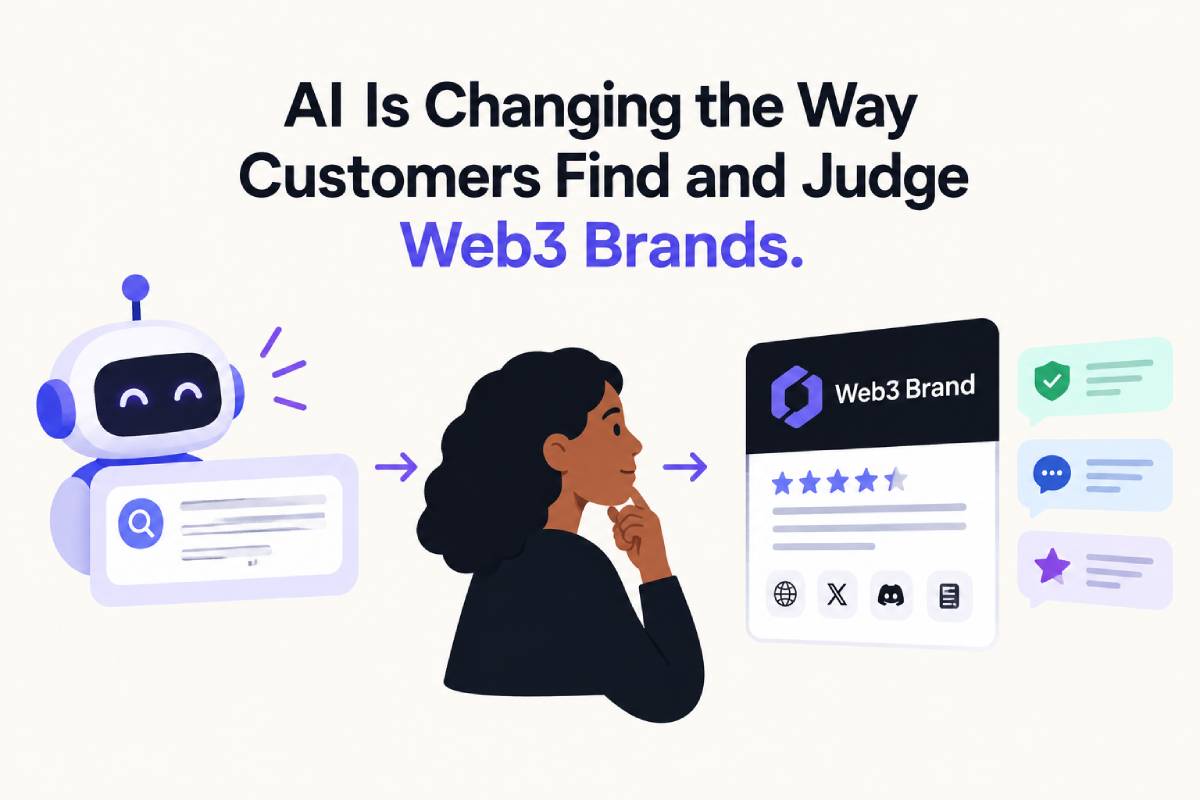


Google and ChatGPT don’t pick brands randomly. They follow signals. If your signals are easy to read and easy to repeat, you get shown, cited, and recommended while buyers research. If your signals are hard to read, you get skipped, even if your product is solid.
Today’s blog breaks down the three signals that decide whether a Web3 brand shows up first, or gets quietly pushed to page two, or worse, never mentioned at all.
You’ll also see why Signal 1 is the lever that makes the other two work.
Quick Answers – Jump to Section
- Signal 1: On-site clarity that’s built to be quoted
- Signal 2: Brand popularity in the right places
- Signal 3: Clear brand and entity data
- Final Thoughts
- Frequently Asked Questions
Signal 1: On-site clarity that’s built to be quoted
If your site is vague, AI tools have to guess what you do, who it’s for, and when to mention you. When a system has to guess, it usually plays it safe and picks someone else.
This is why you can ‘rank’ and still feel invisible. AI-driven results are built to answer questions fast, so they lean toward pages that make the answer obvious in the first lines, then back it up with clean structure and proof.
A useful outside reference on this is the AIS Media breakdown of why businesses can rank and still not appear in AI search, which points to clarity, structure, and citation confidence as the real filter.
If you want to go deeper on the content side, this post on zero-click search and Web3 is a good next read.

What we build here at InfluxJuice is boring in the best way. Source of truth pages that say exactly who you help, what problem you solve, and what the buyer should do next, without making them dig.
Then we rewrite intros so the answer lands immediately, and we publish buyer-intent pages that match real prompts people type when they’re close to a decision.
If you want a simple way to pressure test your own pages, this post on how to write content that ChatGPT and Gemini quote will show you what ‘quote-ready’ looks like in practice.
Signal 2: Brand popularity in the right places
This is not followers or empty attention. It’s your brand showing up in places your buyers already read, watch, and listen to, so Google and AI tools can cross-check you.
When your brand appears across third-party sources, it reduces risk for the machine. It can see other people talking about you, describing you, and placing you in a category. That makes it easier to repeat your name when someone asks for options.
For Web3 teams, this often means being present in the channels where builders and decision-makers already hang out: niche newsletters, podcasts, YouTube clips, founder-led posts, and industry blogs. The point is not to be everywhere. The point is to be in the same places your buyers use to validate a decision.
If you want a clean way to think about this, this post on how to earn AI citations and brand mentions in Web3 lays out the mechanics without turning it into a PR fantasy.
Signal 3: Clear brand and entity data
This is the technical layer that removes friction once your message is clear. Schema, descriptions, images, and consistent entity signals help machines read your site cleanly and match you to the right category.
Schema is not a magic button, and anyone selling it like one is selling hope. Even Search Engine Land puts it plainly: schema won’t guarantee citations, but it can help AI systems understand entities and relationships, especially when it’s implemented cleanly and consistently.
Where this gets practical is simple. You want your Organization, Website, and key page markup to be consistent, and you want your brand name, product names, and core topics to be described the same way across your site and your off-site mentions.
We help clients trigger all three signals.
If you want the Web3 version of this, this guide on entity-based SEO for Web3 teams will help you tighten the “who are we” signals without turning your site into a schema museum.
Final Thoughts
Google and ChatGPT don’t ignore you because of a lazy workethic. They ignore you because your signals are unclear, unsupported, or inconsistent, and the machine can’t risk recommending the wrong thing.
Your best leads usually come from the simple bits you can fix fast:
- clear offer
- a simple page that loads properly
- proof you can do what you say
These will beat fancy wording every time.
When you focus on the few things that block a buyer from taking the next step, you stop spending time on more content and start getting replies from people who can pay.
Remember that Signal 1 is the lever.
When your on-site clarity is built to be quoted, Signal 2 becomes easier to build because people can repeat your positioning, and Signal 3 becomes easier because your entity data has something real to reinforce.
Start small and make it easy to say yes. Pick one niche, run the same quick check on five businesses, and turn what you find into a short, useful Loom or one-page note.
Then offer the next step in simple CTA: a free scan, a short call, or a fixed-price first job.
Our CTA is that we trigger all three signals for our clients, bringing more free buyer traffic without relying on ads.
If you want help applying this to your site and offer, book a call here.
Frequently Asked Questions
Why does my Web3 company rank on Google but not show up in AI answers
Ranking and AI visibility are not the same thing. AI systems pull from pages they can quote cleanly, so if your positioning is vague, your answers are buried, or your structure is hard to parse, you can rank and still get skipped.
Start by rewriting your key pages so the answer is obvious in the first lines, then add proof, clear headings, and FAQs that match real buyer questions.
What does “built to be quoted” mean
It means your page makes it easy for a machine to extract a clean, correct answer. Clear headings, direct answers, simple definitions, and proof close to the claim all increase the odds you get cited.
If your best explanation is hidden under long intros or generic copy, the machine has to guess, and it usually chooses someone else.
Is schema enough to get cited by Google AI or ChatGPT
No. Schema helps machines understand entities and relationships, but it does not replace clear content. Think of schema as the label on the box, not the product inside the box.
Get Signal 1 right first, then use schema to remove friction and reduce mislabelling.
What off-site signals help a Web3 brand get mentioned more often
Mentions and coverage in places your buyers already use to validate decisions. That can include niche blogs, podcasts, YouTube interviews, newsletters, and founder-led social posts that get referenced by others.
The goal is not volume. The goal is repeated, consistent positioning across sources that already carry weight in your category.
What should I fix first if I only have two hours
Start with one source of truth page and one buyer-intent page. Make the first lines direct, add proof near your claims, and include a short FAQ based on what prospects ask on calls.
Then tighten your internal linking so related pages reinforce each other, instead of living as isolated posts.
_________________________________________________________________
Download the free Growth Engine Blueprint here and copy how we generate leads for our clients.
Want to know how we can guarantee a mighty boost to your traffic, rank, reputation and authority in you niche?
Tap here to chat to me and I’ll show you how we make it happen.
If you’ve enjoyed reading today’s blog, please share our blog link below.
Do you have a blog on business and marketing that you’d like to share on influxjuice.com/blog? Contact me at rob@influxjuice.com.