
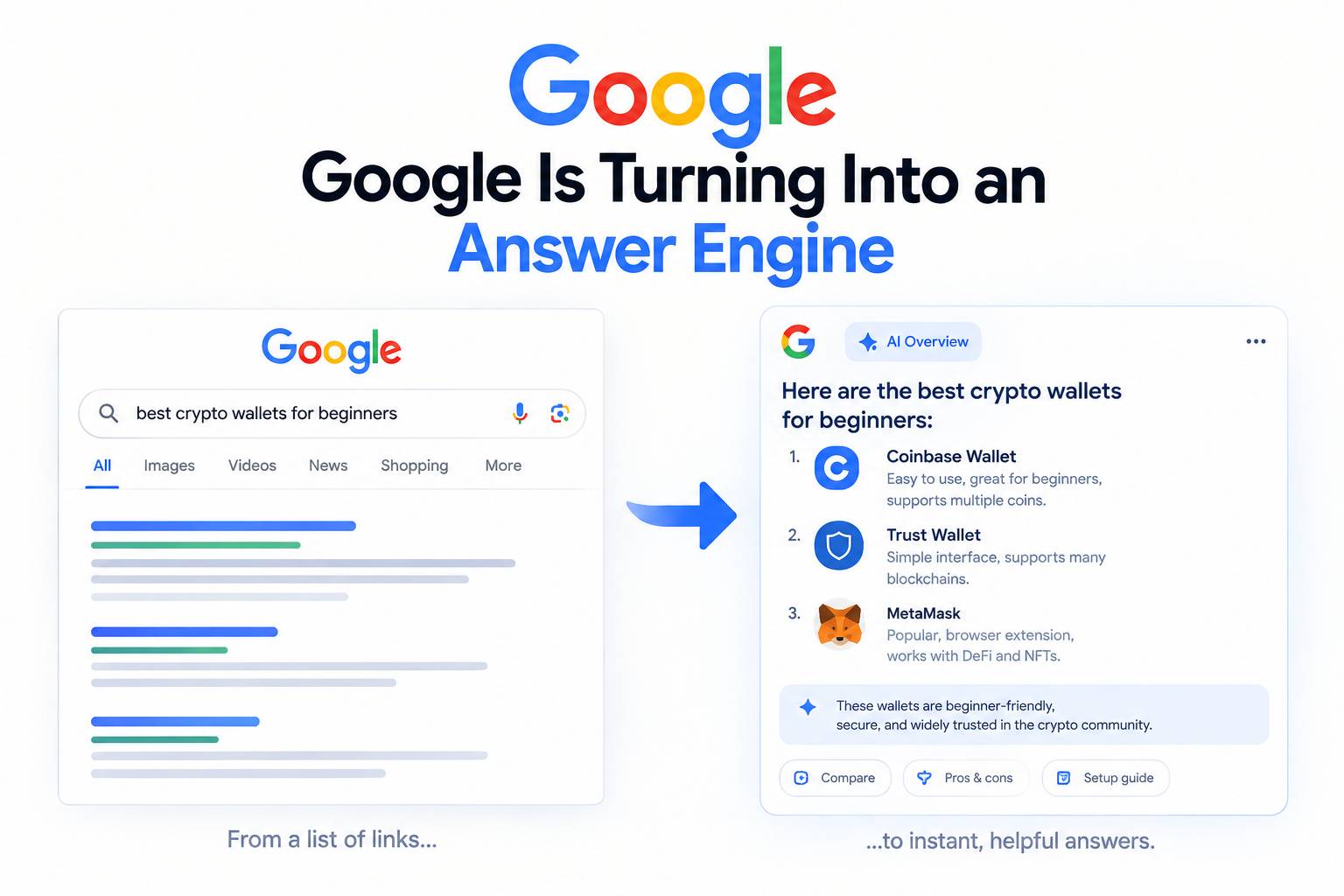
Google used to hand you a list of links and wish you luck. Now it often hands you the answer. AI Overviews, AI Mode, and answer boxes sit above the old blue links, and many people never click a single result.
The short reason is simple: Google wants searchers to get what they need quickly, and AI chat tools have made quick answers the new normal. For web3 teams, this means ranking is no longer the whole game. You also need to be the source Google quotes. This post covers what changed, why Google is making the move, what people ask now, and how to become the answer.
_____________________________________________________________
Quick Navigation – Table of Contents
- From Ten Blue Links to One Direct Answer
- Why Google Wants to Answer Instead of Send
- What People Ask Google Now
- How Web3 Brands Can Be the Answer Google Picks
- Final Thoughts
- Frequently Asked Questions
__________________________________________________________
From Ten Blue Links to One Direct Answer
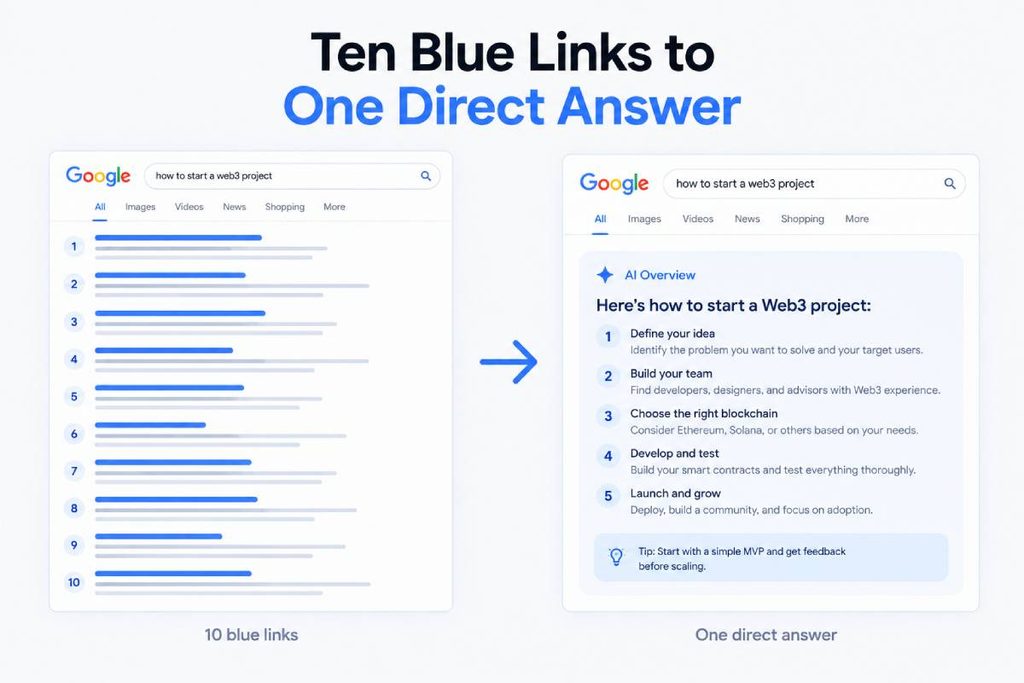
The old way worked like this. You typed a few keywords, scanned ten links, and opened a pile of tabs. Then you pieced the answer together yourself.
The new way is different. Google reads your question, pulls facts from several pages, and writes a short summary at the top. In AI Mode, you can ask a follow-up and keep going, much like a chat.
Think about a web3 example. Someone searches “how does a liquid staking token work.” Google may now explain it right on the results page, with a few source links tucked beside the answer.
The searcher gets what they need and moves on. Fewer clicks happen, but the brands named as sources get seen by a lot of people.
If you want a deeper look at this change, see how AI Overviews and ChatGPT are rewriting the web3 search game.
__________________________________________________________
Why Google Wants to Answer Instead of Send
A good librarian does not just point at a shelf. They hand you the book, open to the right page. Google is trying to act more like that librarian. There are four big reasons.
- People like quick answers. Tools like ChatGPT and Perplexity taught everyone to expect a direct reply.
- Competition is real. If searchers leave Google for chat tools, Google loses attention, so it brings the chat style home.
- The tech got better. AI can now read many pages at once and blend them into one short answer.
- Answers keep people on Google longer. That keeps them inside Google’s own pages, where its products live.
This is why so many searches end without a click. Web3 teams cannot wait this out, so it helps to learn how to get found when nobody clicks.
__________________________________________________________
What People Ask Google Now
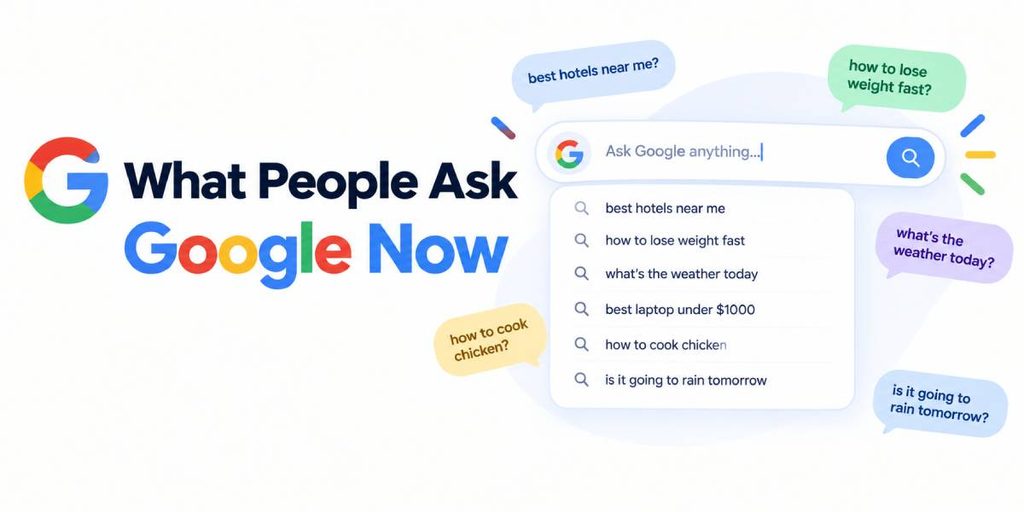
Search queries have grown up. Instead of “best crypto wallet,” people type full questions, the way they would ask a friend. Here are the patterns that show up again and again in web3:
- Legit checks: “Is this protocol legit?” “Has this exchange ever been hacked?”
- Clear definitions: “What is the difference between a hot wallet and a cold wallet?”
- How-to questions: “How do I move USDC to another chain without high fees?”
- Comparisons: “Which staking option is better for a small amount?”
- Follow-ups: “What happens if the validator goes offline?”
Many of these come by voice or in chat form, so they sound like normal speech. That changes how you plan content. Instead of stuffing in keywords, write pages that answer the exact questions people ask. A good starting point is building your topics around the real questions people type.
__________________________________________________________
How Web3 Brands Can Be the Answer Google Picks
You cannot pay Google to quote you. But you can make your pages easy to quote. Here is a simple plan.
- Answer first. Put the direct answer in the first one or two sentences under each heading. Add detail after that.
- Use simple words. Short sentences are easier for both people and machines to read.
- Add FAQ sections. Use real questions from your buyers and give each one a short, direct reply.
- Help Google read your page. Structured data tells Google what each part of a page means. FAQ schema and structured data for crypto and DeFi sites shows how to set it up.
- Describe your brand the same way everywhere. Google picks sources whose facts match across the web.
- Keep facts fresh. Update fees, audits, and supported chains when they change.
Start with step one on your top five pages. It takes little time and often brings the quickest gains.
__________________________________________________________
Final Thoughts
Google is moving from a list of links to a direct answer, and that will not reverse. People now ask full questions and expect a short reply. So the goal for web3 teams has grown. Ranking a page is only part of it.
The rest is being the source Google quotes when someone asks. Put the answer first, use plain words, add real FAQs, and keep your brand facts the same everywhere. Do that, and your name keeps showing up even when nobody clicks.
If you want to accelerate this transition without the trial and error, you can simply mirror our Growth Engine Blueprint. It provides the exact multi-format distribution system and messaging framework needed to lock in your brand authority, ensuring you get cited consistently across both Google search and AI engines.
Grab your free copy of our Growth Engine Blueprint here.
__________________________________________________________
Frequently Asked Questions
Why is Google becoming an answer engine?
Searchers now expect quick, direct replies, and AI chat tools set that standard. Google is adding its own AI summaries to keep up and to keep people on its pages.
What are AI Overviews?
They are short, AI-written summaries that appear at the top of many search results. They pull facts from several web pages and often link to the sources.
Does this mean SEO is dead for web3 projects?
No. Google still needs pages to quote, and strong pages still win. The difference is that being quoted now matters as much as ranking.
What is a zero-click search?
It is a search where the person gets what they need from the results page and never clicks a link.
How do I get my web3 brand quoted in Google’s answers?
Put the direct answer first on each page, add FAQ sections, use structured data, and describe your brand the same way everywhere.
What kind of questions should I write content for?
Start with the legit checks, plain definitions, how-to steps, and comparisons your buyers ask. Use their own words in your headings.
_________________________________________________________________
Download your free copy of the Growth Engine Blueprint here and start accelerating your leads.
Want to know how we can guarantee a mighty boost to your traffic, rank, reputation and authority in you niche?
Tap here to chat to me and I’ll show you how we make it happen.
If you’ve enjoyed reading today’s blog, please share our blog link below.
Do you have a blog on business and marketing that you’d like to share on influxjuice.com/blog? Contact me at rob@influxjuice.com.
Latest Blogs
- Why Google Is Turning Into an Answer Engine, and What It Means for Web3 Teams
- Why Web3 Teams Are Turning to Gamma to Build Decks and Docs Faster
- Cyber5 Prep for Web3 Brands: Get Your Paid Media Ready Before Costs Spike
- How AI Is Changing the Way Customers Find and Judge Web3 Brands
- BrandJet Review: The All-in-One Outreach CRM We Use at Influxjuice