Marketing is moving at record speed. What brought results last year may barely register in 2026, and the brands that adapt early will set the pace while others try to keep up. AI is no longer just a background tool for marketers – it’s becoming the foundation that shapes how customers find, research, and choose businesses.
The majority of marketing leaders see AI transforming their field, yet many still treat it as tomorrow’s challenge rather than today’s reality. By 2026, five core trends will separate forward-thinking brands from those left behind. Understanding these changes now gives you the chance to experiment, refine, and lead before the crowd catches on.
This guide unpacks the five essential trends that will define digital marketing in 2026, why they matter, and how to get ahead of the curve.
Quick Answers – Jump to Section
- The Rise of Autonomous Marketing Agents
- LLMs Become Transaction Endpoints
- Marketing Funnels Evolve into Agentic Workflows
- The Definitive Move from Keywords to Topic Ecosystems
- Brand Citations Replace Backlinks
- Frequently Asked Questions
- Final Thoughts
1. The Rise of Autonomous Marketing Agents
AI-powered agents are taking a leap forward in 2026. No longer limited to simple chatbots or basic automation, these new autonomous agents will oversee entire marketing processes – from campaign planning to execution and continuous optimisation. These systems won’t just follow pre-set rules; they learn from every interaction, adapt strategies on the fly, and drive growth with minimal human input.
Picture today’s marketing automation: you craft emails, segment audiences, and schedule posts by hand. In 2026, autonomous agents will handle this end-to-end. They’ll monitor campaign data in real time, rewrite copy, test offers, and automatically shift budgets to what’s working best – all without waiting for manual direction.
For businesses, this means faster execution, lower operational costs, and less time spent on repetitive tasks. The brands that embrace these agents will unlock new speed and efficiency, while those clinging to manual processes risk falling behind as the market evolves. The transition isn’t just an upgrade – it’s the new baseline for staying competitive.
2. LLMs Become Transaction Endpoints
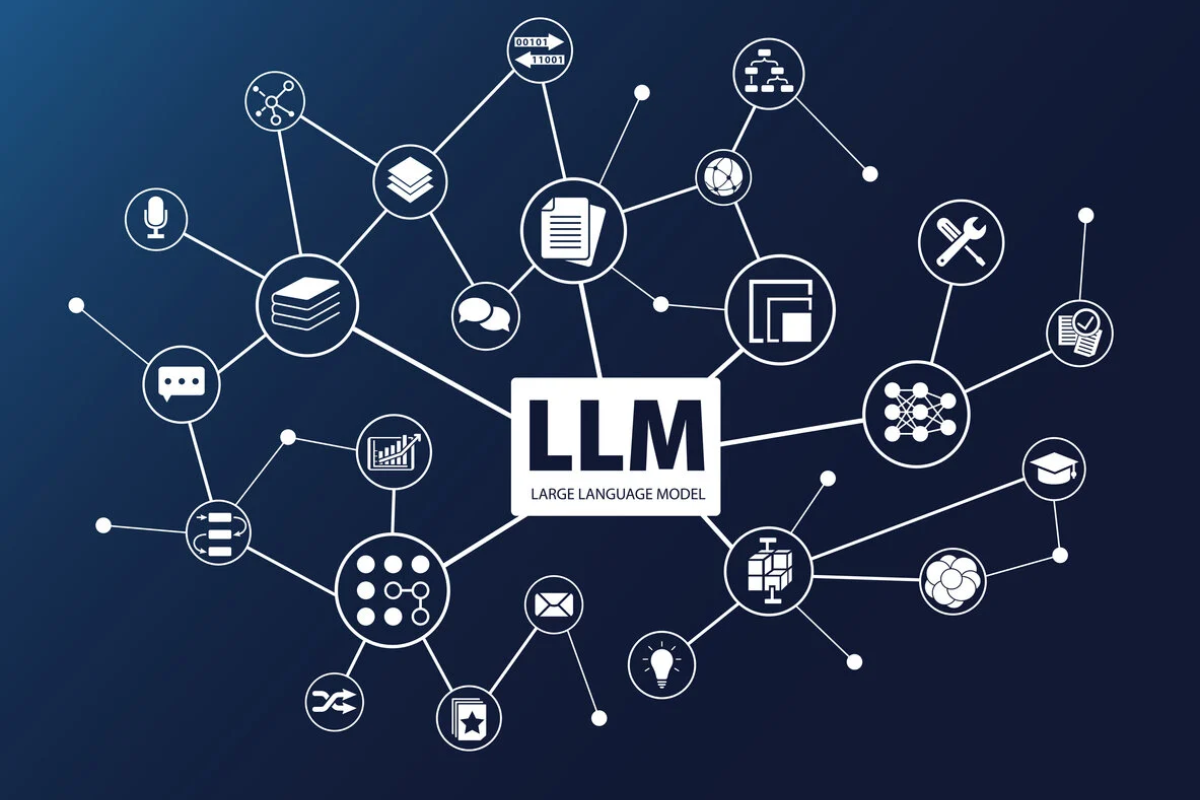
Large Language Models like ChatGPT aren’t just research tools anymore. Instead, by 2026, they’ll function as transaction endpoints where customers discover brands, compare options, and make purchase decisions without ever visiting a traditional website. As a result, this shift fundamentally changes how businesses approach visibility and conversion.
ChatGPT already has over 800 million users, and those users ask high-intent questions that lead directly to purchases. When someone asks “best CRM for small businesses” or “where to buy organic dog food in London,” they’re ready to buy. If your brand isn’t referenced in those AI-generated answers, you’ve lost the sale before the customer even knows you exist.
This is where Generative Engine Optimization becomes essential. Traditional SEO focused on ranking in search results. GEO focuses on being cited directly by AI systems. The brands that master GEO will capture high-intent traffic that never reaches a Google search results page.
InfluxJuice recently worked with Fusion Dental Implants, implementing a three-way marketing strategy combining onsite SEO/GEO, offsite campaigns, and targeted ads. Within months, their lead generation increased significantly because they optimized for both traditional search engines and AI-powered discovery. This dual approach is becoming the standard for businesses that want to stay visible.
3. Marketing Funnels Evolve into Agentic Workflows
The traditional marketing funnel – awareness, consideration, decision – is dying. By 2026, agentic workflows will replace linear funnels with adaptive, AI-driven customer journeys that respond in real-time to individual behavior and preferences.
Instead of pushing every prospect through the same predetermined path, agentic workflows create personalized experiences based on how each person interacts with your brand. AI agents analyze behavior, predict intent, and adjust messaging dynamically. One customer might need detailed case studies and pricing comparisons, while another responds better to quick testimonials and a limited-time offer.
This shift requires businesses to move beyond static funnel templates and embrace systems that learn and adapt. The brands that build agentic workflows will convert at higher rates because they’re delivering exactly what each prospect needs at exactly the right moment. Meanwhile, competitors stuck with outdated funnels will watch conversion rates decline as customers expect more personalized experiences.
4. The Definitive Move from Keywords to Topic Ecosystems
Keyword-focused SEO is becoming obsolete. By 2026, search engines and AI systems will prioritize topic ecosystems – comprehensive content clusters that demonstrate deep expertise across an entire subject area rather than isolated pages targeting individual keywords.
Google and ChatGPT evaluate topical authority by analyzing how thoroughly you cover a subject. A single blog post about “email marketing tips” won’t compete with a brand that publishes interconnected content covering email deliverability, segmentation strategies, automation workflows, compliance requirements, and performance analytics. The more comprehensive your coverage, the more authority you build.
Building topic ecosystems requires strategic planning. You need pillar content that provides broad overviews, supported by deep-dive articles that explore specific aspects in detail. Internal linking connects these pieces, signaling to search engines and AI systems that you’re a definitive source on the topic. Additionally, optimizing your blog with internal linking strengthens your topical authority and improves your chances of being referenced by AI.
This approach delivers better results than chasing individual keywords ever could. Topic ecosystems attract more traffic, rank for hundreds of related queries, and position your brand as the go-to authority in your niche.
5. Brand Citations Replace Backlinks
Backlinks have been the currency of SEO for decades, but by 2026, brand citations will matter more. AI systems like ChatGPT don’t follow backlinks – they reference brands based on how often and where they’re mentioned across the web. If your brand appears frequently on trusted platforms like Reddit, YouTube, Wikipedia, and industry publications, AI will cite you. If it doesn’t, you’re invisible.
This shift changes how businesses approach authority building. Instead of focusing solely on getting links from high-authority websites, you need to focus on getting mentioned. That means engaging authentically in communities where your audience gathers, creating content worth referencing, and distributing your message across multiple platforms.
InfluxJuice’s distribution strategy addresses this directly by publishing content across 700+ websites in six formats – news articles, blog posts, audio ads, slideshow presentations, videos, and infographics. This multimodal approach maximizes brand citations and ensures visibility across both traditional search engines and AI systems. Furthermore, understanding how to measure GEO success helps you track citation impact and refine your strategy over time.
The brands that build citation networks now will dominate AI-powered discovery in 2026, while competitors still focused exclusively on backlinks will struggle to maintain visibility.
Frequently Asked Questions
Q: How quickly do I need to adapt to these trends? A: Start now. The majority of these trends are already emerging, and by 2026 they’ll be standard practice. Early adopters will capture the advantage before markets become saturated.
Q: Can small businesses compete with these strategies? A: Absolutely. In fact, smaller businesses often adapt faster than large enterprises. Focus on one or two trends initially, test what works, and scale from there.
Q: Do I need to abandon traditional SEO completely? A: No. Traditional SEO still matters, but it needs to work alongside GEO and citation building. The brands that win will optimize for both traditional search engines and AI systems simultaneously.
Q: What’s the biggest mistake businesses make with AI marketing? A: Treating AI as a future concern rather than a present reality. The time to optimize for AI-powered discovery is now, not when your competitors have already established dominance.
Q: How do I know if my current marketing strategy is ready for 2026? A: Run an AI and search readiness assessment. Check whether your brand appears in ChatGPT responses, how often you’re cited across the web, and whether your content is structured for AI discovery.
Q: Which trend should I prioritize first? A: Start with GEO and brand citations. These deliver immediate impact and position you for the other trends. Once you’re visible in AI systems, layer in automation and agentic workflows.
Final Thoughts
The marketing ecosystem in 2026 will look fundamentally different from today. Super agents will automate workflows, LLMs will become transaction endpoints, agentic workflows will replace static funnels, topic ecosystems will dominate search rankings, and brand citations will matter more than backlinks. These aren’t distant possibilities – they’re emerging realities that smart businesses are already preparing for.
The question isn’t whether these trends will reshape marketing. They will. The question is whether you’ll adapt early enough to capture the advantage or wait until competitors have already established dominance. The brands that move now will build authority, visibility, and conversion systems that become increasingly difficult to replicate as the market matures.
If you want to see where your brand currently stands across AI systems and traditional search engines, run our AI + Search Readiness Scan. It shows exactly where you’re visible, where you’re missing opportunities, and what to fix first. The scan is free, and it gives you a clear starting point for adapting to these five trends before 2026 arrives.
Don’t wait for the future to arrive, start building for it today.
_________________________________________________________________
Get your business referenced on ChatGPT with our free GEO Marketing Playbook.
Want to know how we can guarantee a mighty boost to your traffic, rank, reputation and authority in you niche?
Tap here to chat to me and I’ll show you how we make it happen.
If you’ve enjoyed reading today’s blog, please share our blog link below.
Do you have a blog on business and marketing that you’d like to share on influxjuice.com/blog? Contact me at rob@influxjuice.com.